
- Buy Crypto
- Markets
 Futures
- Spot
- Copy Trade
- Earn
- More
Data Analysis: How has the Monad Testnet performed since its launch?

Original Title: Monad: Public Testnet
Original Author: Hess
Original Translation: Deep Tide TechFlow
The Monad testnet was officially launched on February 19th!
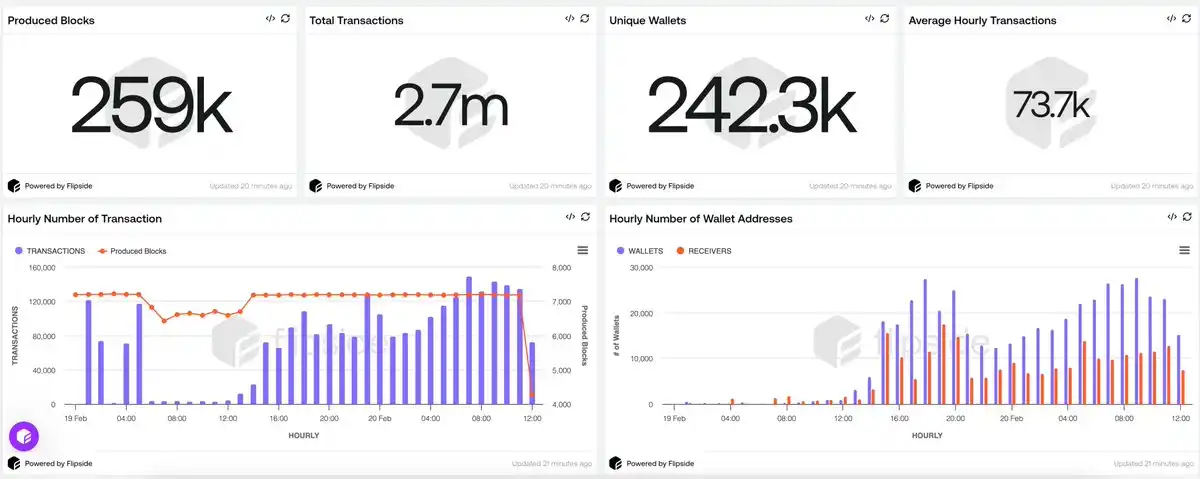
So far, the network has successfully processed nearly 2.7 million transactions, covering 242,300 unique addresses, with a transaction success rate of 98%, and a block generation time of just 0.5 seconds.
In the initial hours after launch, Monad ran smoothly and achieved peak performance of 3000 transactions per second (TPS).
Let's delve deeper into this project!

Before we proceed, you can check out detailed information through this link.
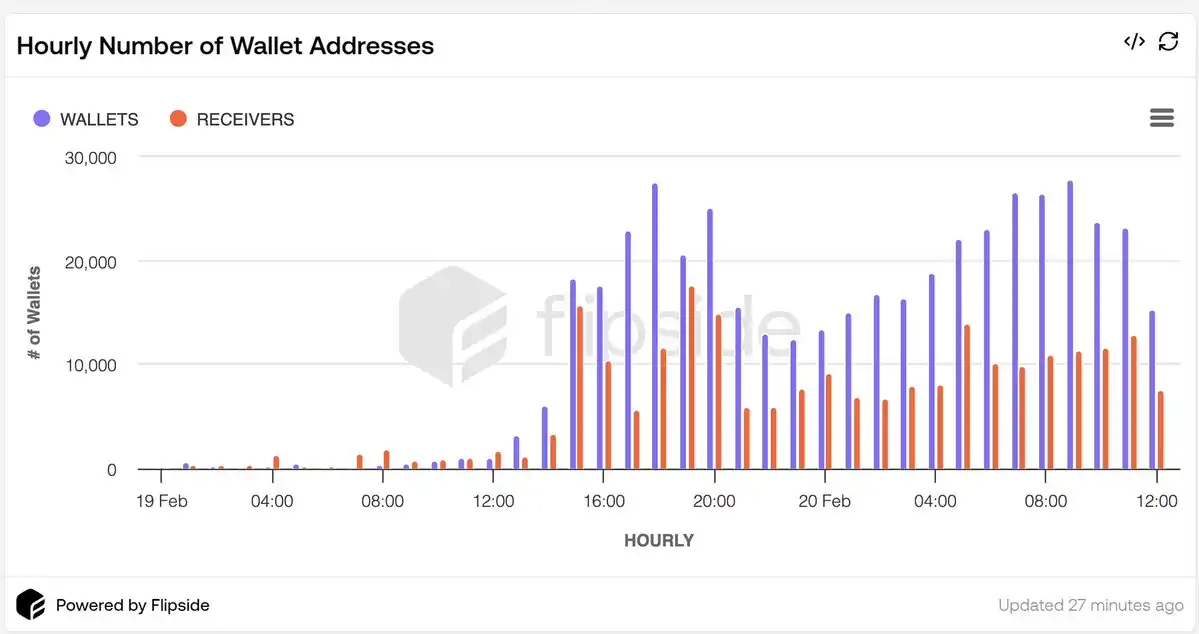
According to Monad's official data, they distributed testnet tokens to around 8.8 million active Ethereum addresses to attract more users to participate in testing and validate network performance.
In less than 24 hours, 3% of these addresses have completed their first transaction on the Monad network.
This ratio is rapidly increasing and is expected to reach 10% in a short time.
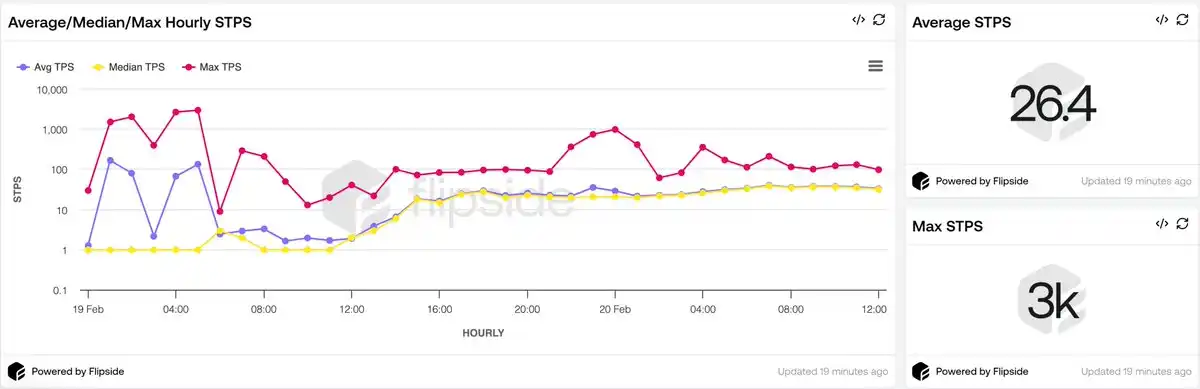
The large-scale distribution of testnet tokens has directly driven a significant increase in TPS.
Within just two hours of launch, Monad's average transactions per second (ATPS) reached a peak of 3000.
Currently, Monad's average ATPS is 26, a data point that better reflects the network's performance in daily operation.
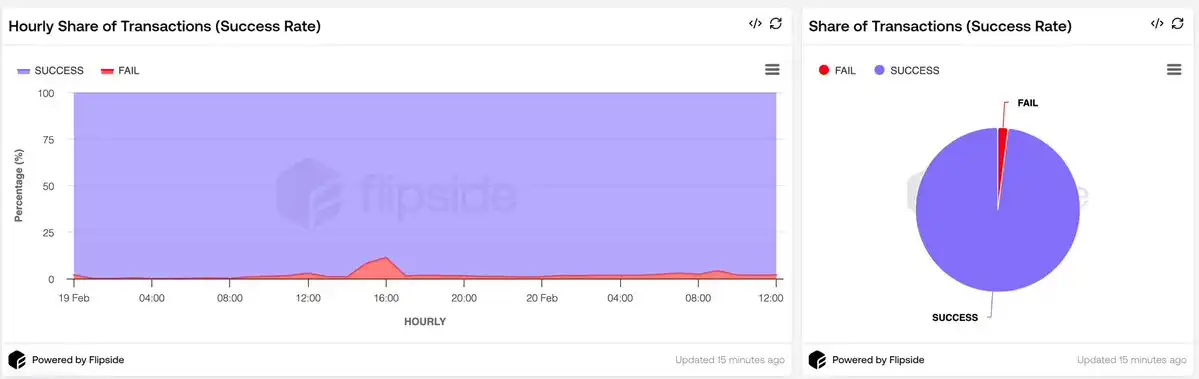
Monad's success rate has placed it among the top players in the blockchain field.
According to testnet data, Monad's transaction success rate is as high as 98%, an impressive performance.
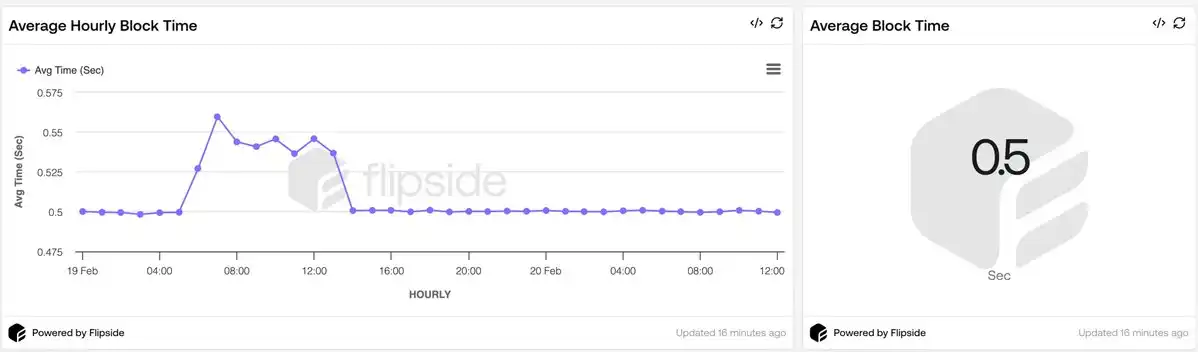
Block time has always been one of Monad's key optimization areas prior to launch.
Test data shows that Monad has an average block time of only 0.5 seconds, making it one of the fastest blockchains currently available, ideal for high-frequency trading and real-time applications.
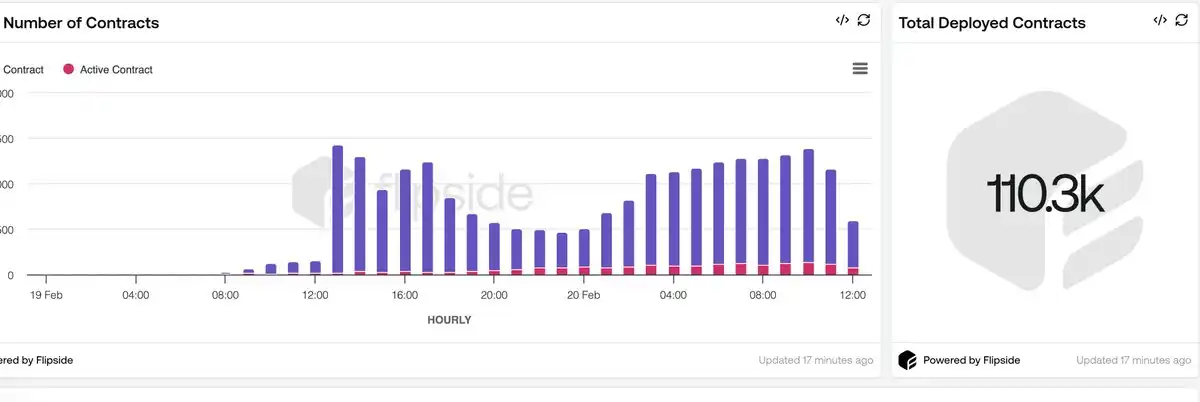
Since the launch of the testnet, Monad has deployed nearly 110,300 smart contracts.
An average of 5,000-6,000 contracts are added per hour, with the current number of active contracts at 500, demonstrating the network's robust activity.
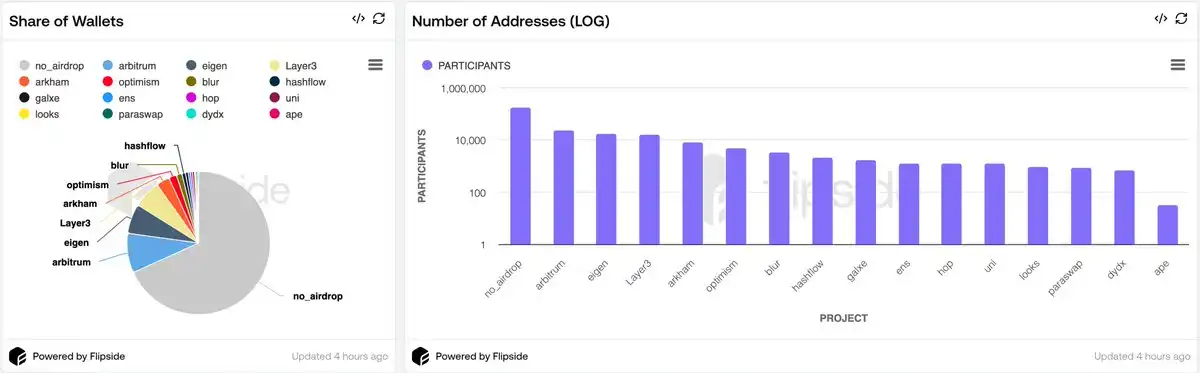
Notably, in addresses that conducted their first transaction on Monad, approximately 77% did not receive airdrops from other popular blockchains or platforms.
Among them, addresses for Airdrops from Arbitrum, Eigen, and Layer3 accounted for the largest proportion.
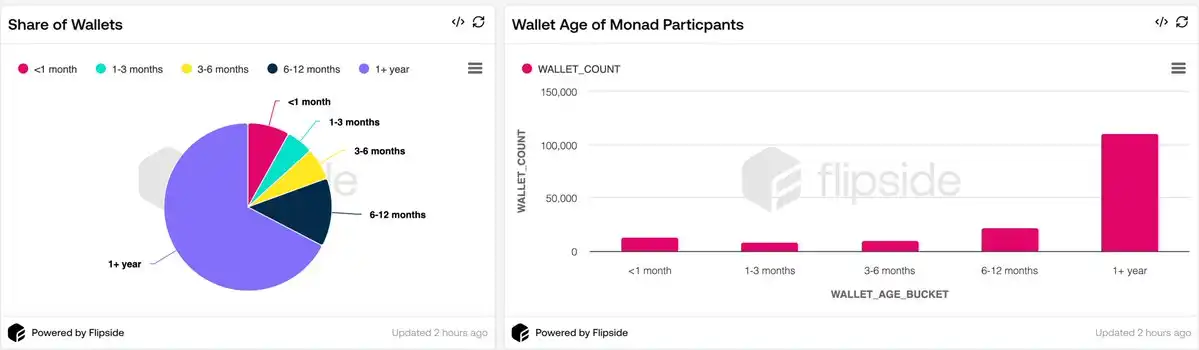
Based on first transaction data analysis of EVM on-chain addresses, 67% of addresses have been active for over a year, while 8% of addresses have been active for less than a month.
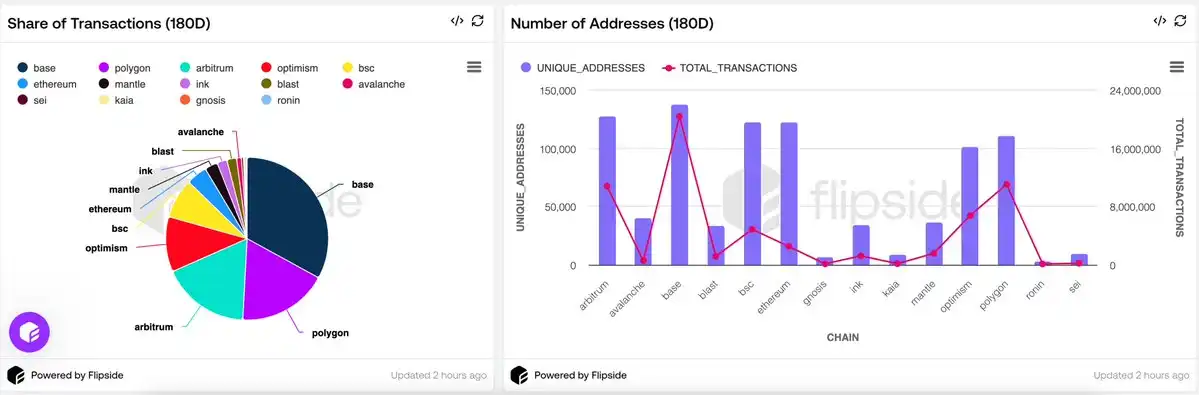
On which blockchains are Monad participants most active?
The data shows that over the past 6 months, Base, Polygon, and Arbitrum have become the top three blockchains where Monad participants are most active. These three chains have attracted a large number of users' attention and usage due to their high performance, low transaction costs, and rapidly growing ecosystems.
You may also like

How a Structured AI Crypto Trading Bot Won at the WEEX Hackathon
Ritmex demonstrates how disciplined risk control and structured signals can make an AI crypto trading bot more stable and reliable on WEEX, highlighting the importance of combining execution discipline with scalable AI trading systems.

Old Indicator Fails, Three Major New Signals Emerge: BTC True Bottom May Still Be Below $60K

Meeting OpenClaw Founder at a Hackathon: What Else Can Lobsters Do?

Huang Renxun's Latest Podcast Transcript: NVIDIA's Future, Embodied Intelligence and Agent Development, Soaring Demand for Inferencing, and AI's PR Crisis
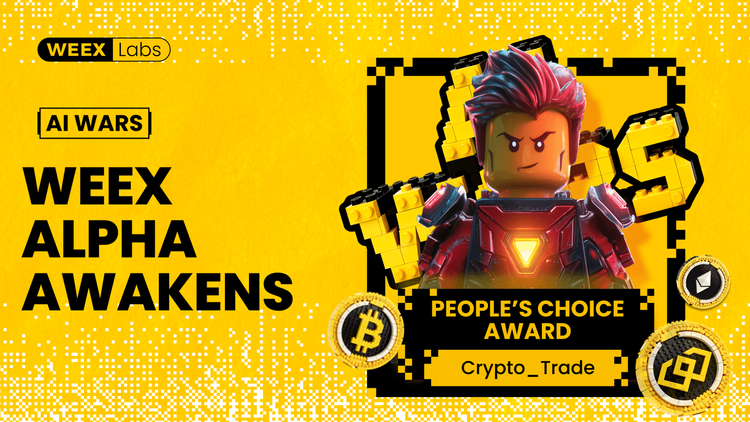
How a Structured AI Crypto Trading Bot Won at the WEEX Hackathon
Crypto_Trade shows how structured inputs and controlled adaptability can build a more stable and reliable AI crypto trading bot within the WEEX AI Trading Hackathon, highlighting a practical path toward scalable AI trading systems.

AI Starts to Devour the Manufacturing Industry | Rewire News Morning Edition

When Scaling Meets Speed, Ethereum Foundation Introduces "Hardness" to Safeguard the Base Layer
Google, Circle, Stripe Flock Together to Let AI Spend Money: Payment Giants' Joys and Worries in 2026 Q1

$100 Billion Factory Purchase: Bezos and Middle Eastern Capital Shift AI Money from Cloud to Shop Floor

Xiaomi and MiniMax both unleash their ultimate moves, signaling the start of the Agent Pricing War.

Predicting markets has taken the spotlight, but the Perp DEX has been quietly waging war on traditional exchanges.

Is the Market Slump Still Making Millions a Day? Is pump.fun's Revenue Real?

Understanding x402 and MPP in One Article: The Two Paths of Agent Payments

Quick Look at the Latest 18 Graduation Projects from Alliance: Who's the Next Pump.fun?

It's not just the prediction market that profits from the Iraq War

The "bank card" of AI has caught the attention of the giants
Morning News | U.S. SEC approves tokenized trading on Nasdaq; Animoca Brands announces investment in AVAX tokens; Algorand Foundation completes strategic integration

$70 trillion wealth transfer, the financial gateway is being rewritten | Interview with Robinhood CEO Vlad Tenev
How a Structured AI Crypto Trading Bot Won at the WEEX Hackathon
Ritmex demonstrates how disciplined risk control and structured signals can make an AI crypto trading bot more stable and reliable on WEEX, highlighting the importance of combining execution discipline with scalable AI trading systems.
Old Indicator Fails, Three Major New Signals Emerge: BTC True Bottom May Still Be Below $60K
Meeting OpenClaw Founder at a Hackathon: What Else Can Lobsters Do?
Huang Renxun's Latest Podcast Transcript: NVIDIA's Future, Embodied Intelligence and Agent Development, Soaring Demand for Inferencing, and AI's PR Crisis
How a Structured AI Crypto Trading Bot Won at the WEEX Hackathon
Crypto_Trade shows how structured inputs and controlled adaptability can build a more stable and reliable AI crypto trading bot within the WEEX AI Trading Hackathon, highlighting a practical path toward scalable AI trading systems.


 App
App