
Forbes 2025: 7 Major Crypto Predictions: More Major Powers Will Allocate Bitcoin Holdings; Crypto Market Cap to Exceed $8 Trillion


Original Article Title: 7 Predictions For Crypto In 2025: Bitcoin, ETFs & Global Adoption
Original Article Author: Leeor Shimron, Forbes
Original Article Translation: Bitpush News
2024 was a historic turning point for Bitcoin and the broader cryptocurrency ecosystem. In that year, the first Bitcoin and Ethereum ETFs were launched, marking true institutional adoption. Bitcoin surpassed the $100,000 milestone for the first time, while stablecoins continued to solidify the dollar's dominance globally. To further drive this momentum, the winning U.S. presidential candidate will make support for Bitcoin a key pillar of their campaign.
Overall, these milestones solidified 2024 as the year the crypto industry proved itself an unstoppable force on the global stage. As the industry shifts its focus to 2025, here are seven major predictions for the significant events that may occur next year.
1) A Major Country from the Group of Seven (G7) or BRICS Nations Will Establish and Announce a Strategic Bitcoin Reserve

The Trump administration proposed establishing a Strategic Bitcoin Reserve (SBR) for the United States, sparking much debate and speculation. While adding Bitcoin to the U.S. Treasury's balance sheet would require significant political will and congressional approval, merely proposing this initiative has far-reaching implications.
By signaling the possibility of an SBR, the United States is effectively inviting other major countries to consider similar actions. Game theory suggests that these countries may be incentivized to take preemptive action and potentially gain a strategic advantage in national reserve diversification ahead of the U.S. The limited supply of Bitcoin and its emergent role as a digital store of value may intensify the urgency for countries to act swiftly.
Now, a "race to be the first" is unfolding to see which major country will be the first to incorporate Bitcoin into its national reserves, holding Bitcoin as part of their asset diversification alongside gold, foreign exchange, and government bonds. This move will not only solidify Bitcoin's position as a global reserve asset but may also reshape the landscape of international finance, with profound implications for economic and geopolitical power structures. Any major economy establishing a strategic Bitcoin reserve could signal the beginning of a new era in sovereign wealth management.
2) Stablecoins Will Continue to Grow, Doubling in Size to Over $400 Billion
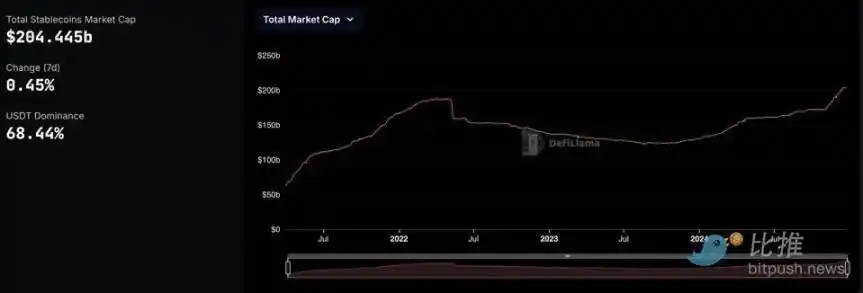
Stablecoins have become one of the most successful mainstream use cases of cryptocurrency, bridging the gap between traditional finance and the cryptocurrency ecosystem. Millions of people worldwide use stablecoins for remittances, everyday transactions, and to hedge against local currency volatility by leveraging the relative stability of the US dollar.
By 2024, the circulation of stablecoins reached an all-time high of $200 billion, with market leaders being Tether and Circle. These digital currencies rely on blockchain networks such as Ethereum, Solana, and Tron to facilitate seamless, borderless transactions.
Looking ahead, stablecoin growth is expected to accelerate in 2025, possibly doubling to surpass $400 billion. The enactment of stablecoin-specific legislation will drive this growth, potentially providing much-needed regulatory clarity and fostering innovation in the industry. US regulators are increasingly recognizing the strategic importance of stablecoins in strengthening the global dominance of the US dollar and solidifying its status as the world's reserve currency.
3) Bitcoin DeFi Supported by L2 Will Become a Major Growth Trend
Bitcoin is transcending its role as a store of value, and Layer 2 (L2) networks such as Stacks, BOB, Babylon, CoreDAO have unlocked the potential of a thriving Bitcoin DeFi ecosystem. These L2 solutions enhance Bitcoin's scalability and programmability, enabling decentralized finance (DeFi) applications to thrive on the most secure and decentralized blockchain.
2024 was a transformative year for Stacks, introducing the Nakamoto upgrade and sBTC. The Nakamoto upgrade enabled Stacks to inherit 100% of Bitcoin's determinism and introduced faster block times, significantly improving the user experience. Meanwhile, the trustless Bitcoin-backed asset sBTC, launched in December, facilitated seamless participation in DeFi activities such as lending, swapping, and staking—all built on the security of Bitcoin.
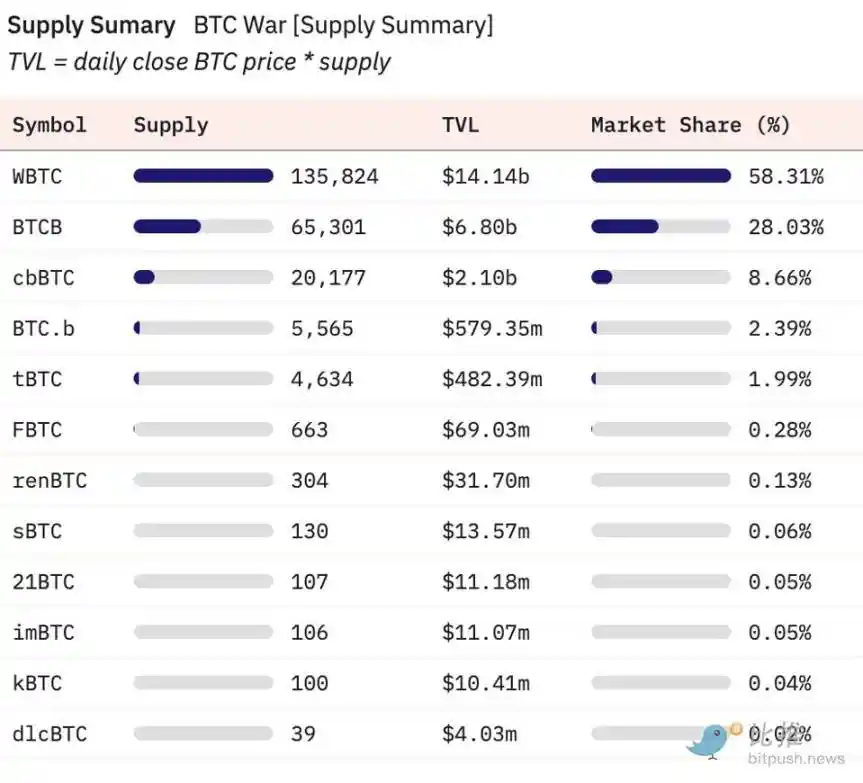
Previously, Bitcoin holders seeking DeFi opportunities were required to move their Bitcoin to other networks like Ethereum. This process relied on centralized custodians like WBTC (BitGo), BTCB (Binance), and cbBTC (Coinbase), exposing users to centralization and censorship risks. Bitcoin L2 mitigated these risks, providing a more decentralized alternative that allows Bitcoin to operate natively within its own ecosystem.
Looking to 2025, Bitcoin DeFi will experience exponential growth. I predict that the total value locked (TVL) on Bitcoin L2 will surpass the $240 billion represented by current wrapped Bitcoin derivatives, accounting for approximately 1.2% of Bitcoin's total supply. With Bitcoin's market cap reaching $2 trillion, L2 networks will enable users to unlock this immense potential value more securely and efficiently, solidifying Bitcoin's position as the cornerstone of decentralized finance.
4) Bitcoin ETF Will Continue to Surge, New Crypto-Focused ETFs Will Emerge
The launch of spot Bitcoin ETFs marked a historic milestone, becoming the most successful ETF debut in history. These ETFs attracted over $108 billion in assets under management (AUM) in their first year, showcasing unparalleled demand from retail and institutional investors. Major players such as BlackRock, Fidelity, and Ark Invest played a key role in introducing regulated Bitcoin exposure to the traditional financial markets, laying the foundation for an innovative wave of crypto-focused ETFs.
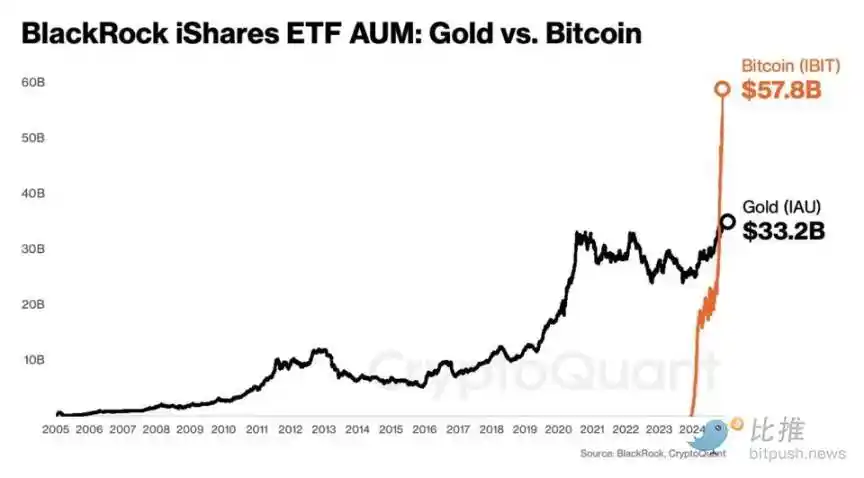
Following the success of Bitcoin ETFs, Ethereum ETFs have also emerged, providing investors with exposure to the second-largest cryptocurrency by market capitalization. Looking ahead, I anticipate staking to be integrated into Ethereum ETFs for the first time in 2025. This feature will allow investors to earn staking rewards, further enhancing the appeal and utility of these funds.
It is expected that ETFs for other crypto protocols (such as Solana) will soon be launched, with Solana gaining prominence for its high-performance blockchain, thriving DeFi ecosystem, and rapid growth in gaming, NFTs, and meme coins.
Additionally, we may see the introduction of weighted crypto index ETFs aimed at providing diversified investment exposure to the broader crypto market. These indexes may include top-performing assets such as Bitcoin, Ethereum, Solana, and emerging protocols, offering investors a balanced portfolio to capture the growth potential of the entire ecosystem. Such innovations will make crypto investments more accessible, efficient, and appealing to a wider range of investors, further driving capital into the space.
5) Apart from Tesla, Another Company in the "Magnificent Seven" Will Add Bitcoin to Its Balance Sheet
The Financial Accounting Standards Board (FASB) has introduced fair value accounting rules for cryptocurrency, which will be effective for fiscal years beginning after December 15, 2024. These new standards require companies to report their holdings of Bitcoin and other cryptocurrencies at fair market value, capturing real-time gains and losses from market fluctuations.
Prior to this, digital assets were classified as intangible assets, forcing companies to impair asset values while prohibiting the recognition of unrealized gains. This conservative approach often underestimated the true value of cryptocurrency assets on a company's balance sheet. The new rules address these limitations, making financial reporting more accurate and making cryptocurrency a more attractive asset for corporate finance.
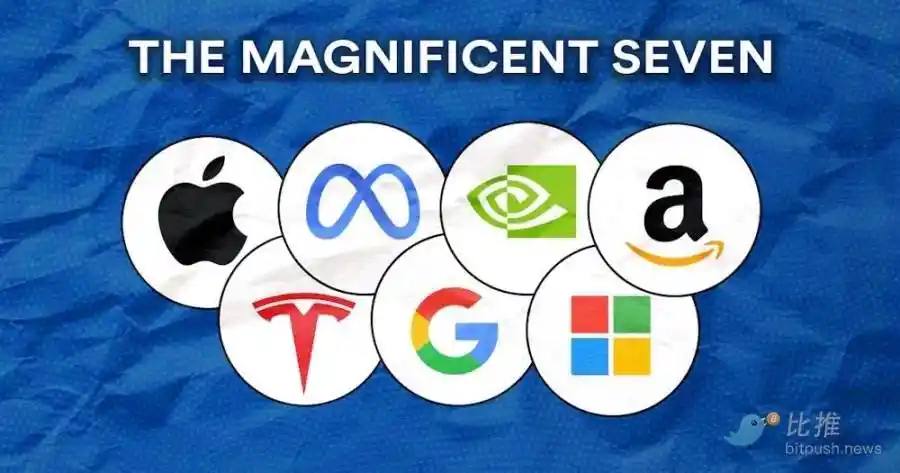
Big Seven — Apple, Microsoft, Google, Amazon, Nvidia, Tesla, and Meta — collectively hold over $600 billion in cash reserves, providing them with significant flexibility to allocate some of that capital to Bitcoin. With strengthening accounting frameworks and increased regulatory transparency, one or more of these tech giants, besides Tesla, are highly likely to add Bitcoin to their balance sheets.
This move would demonstrate prudent financial management:
· Inflation Hedging: Guarding against fiat currency devaluation.
· Reserve Diversification: Adding unrelated scarce digital assets to their portfolio.
· Leveraging Appreciation Potential: Capitalizing on Bitcoin's long history of growth.
· Strengthening Technological Leadership: Aligning with a spirit of digital transformation and innovation.
As new accounting rules take effect and corporate finances adapt, Bitcoin could become a key reserve asset for the world's largest tech companies, further legitimizing its role in the global financial system.
6) Cryptocurrency Total Market Cap to Exceed $8 Trillion
By 2024, the total cryptocurrency market cap soared to a historic high of $3.8 trillion, encompassing a broad range of use cases, including Bitcoin as a store of value, stablecoins, DeFi, NFTs, meme coins, GameFi, SocialFi, and more. This explosive growth reflects the expanding influence of the industry and the increasing adoption of blockchain-based solutions across various sectors.
By 2025, the pace of developer talent flowing into the crypto ecosystem is expected to accelerate, driving the creation of new applications that achieve product-market fit and attract millions of additional users. This wave of innovation may fuel breakthrough decentralized applications (dApps) in areas such as artificial intelligence (AI), decentralized finance (DeFi), decentralized physical infrastructure network (DePIN), and other nascent fields.
These transformative dApps offer tangible utility, solve real-world problems, and will boost adoption rates within the ecosystem and increase economic activity. With an expanding user base and capital influx into the space, asset prices are also set to rise, propelling the overall market cap to unprecedented heights. Riding on this momentum, the cryptocurrency market is poised to surpass $8 trillion, signaling ongoing growth and innovation in the industry.
7) The Revival of Crypto Startups: The U.S. Will Reclaim Its Position as a Global Crypto Powerhouse
The U.S. crypto industry is on the cusp of a transformative revival. The controversial "enforcement-first" approach of Securities and Exchange Commission (SEC) Chair Gary Gensler is set to end with his departure in January next year, a method that stifled innovation and drove many crypto startups overseas. His successor, Paul Atkins, brings a vastly different perspective. As a former SEC commissioner (2002-2008), Atkins is known for his pro-crypto stance, support for regulatory relaxation, and leadership in initiatives supporting crypto advocacy groups like the Token Alliance. His approach promises to establish a more collaborative regulatory framework that fosters innovation rather than suppresses it.
"Operation Chokepoint 2.0" was a secret plan aimed at restricting crypto startups' access to the U.S. banking system. The end of this plan laid the groundwork for the revival of cryptocurrency. By restoring the right to fair use of banking infrastructure, the U.S. is creating an environment for blockchain developers and entrepreneurs to thrive without undue restrictions.
Regulatory Clarity: The shift in leadership at the SEC and balanced regulatory policies will reduce uncertainty for startups, creating a more predictable environment for innovation.
Access to Capital and Resources: With the removal of banking barriers, crypto companies will find it easier to access capital markets and traditional financial services, enabling sustainable growth.
Talent and Entrepreneurship: The reduction of regulatory hostility is expected to attract top blockchain developers and entrepreneurs back to the U.S., revitalizing the ecosystem.
The increased regulatory transparency and renewed support for innovation will also lead to a significant increase in token issuance within the U.S. Startup companies will have the ability to issue tokens as part of their fundraising and ecosystem-building efforts without fearing regulatory backlash. These tokens include utility tokens for decentralized applications and governance tokens for protocols, which will attract both domestic and international capital while encouraging participation in U.S. projects.
Conclusion
Looking ahead to 2025, it is evident that the crypto industry is entering a new era of growth and maturity. With Bitcoin solidifying its position as a global reserve asset, the rise of ETFs, and the exponential growth of DeFi and stablecoins, the foundations for widespread adoption and mainstream attention are being laid.
With clearer regulations and support from breakthrough technologies, the crypto ecosystem is poised to break barriers and shape the future of global finance. These predictions highlight a year full of potential as the industry continues to prove itself as an unstoppable force.
You may also like

Galaxy Deep Dive: Is the Bitcoin Four-Year Cycle Still Valid?

Value Distribution of Stablecoins

On the day of SpaceX's IPO, the first real test of the three perpetual mechanisms

Claude enforces "facial recognition for household registration," starting in July, no ID card means no access?

After 18 years, blockchain has finally started to head towards the main channel

SpaceX IPO, Nvidia, and Bitcoin: Why Traders Are Watching More Than Just Crypto in 2026

Paul Graham: How to Make a Billion Dollars

If the AI bubble has already burst, who will truly remain?

Morning Report | Prediction market platforms like Kalshi and Polymarket jointly sue Kentucky over 14.25% trading tax; Bridgewater founder discusses decision-making in the AI era: principled thinking should run parallel to AI, human insight remains irre...
What is the connection between Huang Zheng of Pinduoduo and blockchain?

The other side of Musk's trillion-dollar fortune: 85% cannot be sold
The U.S. government prohibits foreigners from using Fable 5, Anthropic issues a rebuttal

Citibank releases "2030 Asset Tokenization Market Outlook": 6 major trends may create a $8.2 trillion market
The trillion-dollar valuation test: Are the three major super IPOs a celebration for tech stocks or a nightmare for the crypto market?
Morning Report | Digital Asset completes $355 million financing led by a16z Crypto; Meta completes operational separation from Manus

a16z Crypto Partner: Cash flow is the moat

Cryptocurrency market makers collectively seek change as it becomes increasingly difficult to make money

How TradeXYZ, xStocks, and Alpaca break down the SpaceX IPO into three different strategies
Galaxy Deep Dive: Is the Bitcoin Four-Year Cycle Still Valid?
Value Distribution of Stablecoins
On the day of SpaceX's IPO, the first real test of the three perpetual mechanisms
Claude enforces "facial recognition for household registration," starting in July, no ID card means no access?
After 18 years, blockchain has finally started to head towards the main channel
SpaceX IPO, Nvidia, and Bitcoin: Why Traders Are Watching More Than Just Crypto in 2026


