
- Buy Crypto
- Markets
 Futures
- Spot
- Copy Trade
- Earn
- More
How to Determine the Reliability of a Crypto Dev Through GitHub?

How Important Is a Reliable Dev?
Waking up from a nap, SKYAI holders were shocked to find their once-promising AI Alpha project had suffered a 99% market crash with no recovery in sight.
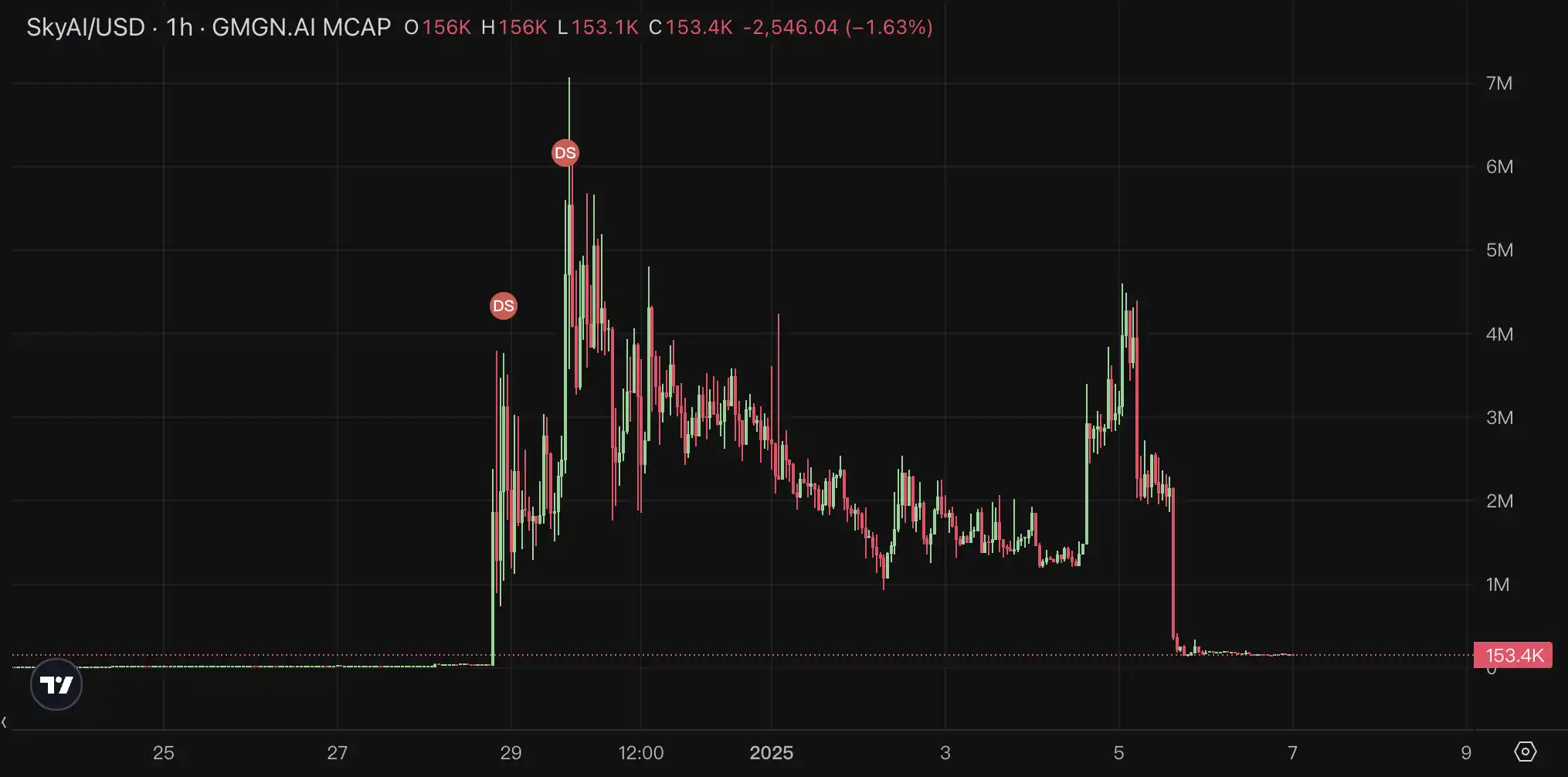
The reason for this situation was revealed when SKYAI's developer, Bob (@futuristfrog), announced on January 5th that his experiment had failed, stating, "Bad news. I have failed." Following this, SKYAI's price plummeted, leading many previously optimistic investors to demand a reliable project team, emphasizing the crucial role a founder plays in a project's success.

Bob was later exposed as a high school student in 2022, and SKYAI was initially touted as a practical token by a genius Dev. In his final statement, Bob admitted, "Up to now, I have only created very narrow, overfitted computer applications AI agents, and even so, these agents have had little to no effectiveness." Consequently, he decided not to make any updates to SkyAI until the release of the next-generation large model.
Would this behavior be considered responsible Dev behavior? From an investor's profitability perspective, clearly, he cannot be deemed a good Dev.
Similarly, on January 5th, the native token of The Hive, a DeFi AI Agent that participated in the Solana AI hackathon, called BUZZ, saw its market cap soar to over $80 million within two days. The reason for this FOMO was that the community discovered that its Dev, Jason Hedman, had almost always taken first place in every project he participated in, being a 9-time hackathon winner. His GitHub contributions are also very dense, with a complete resume and a clear development history.
Related Read: "BUZZ Market Cap Soars to $40M, Is the 'DeFi Agent' Making Waves?"
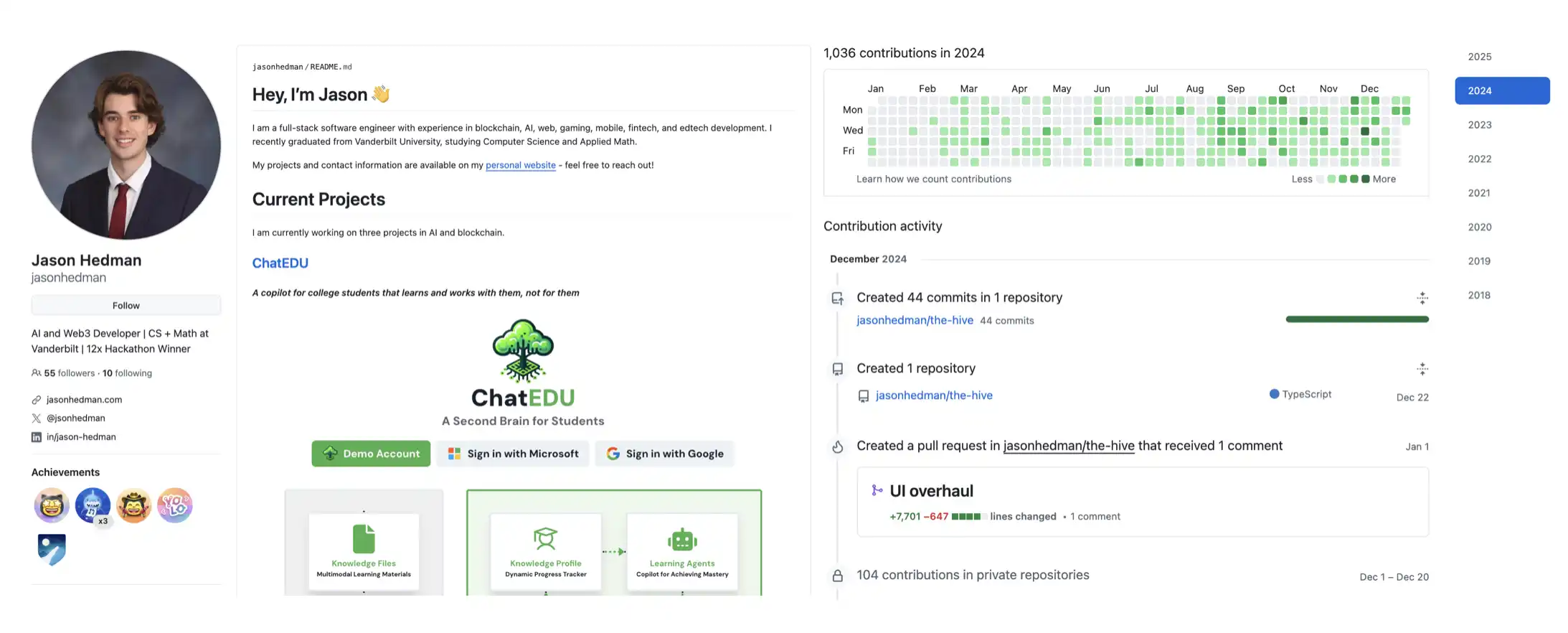
Jason's GitHub Profile
Furthermore, Jason holds 5% of BUZZ's token supply, but to enhance the project's transparency and market trust, he decided to lock this portion of the tokens for a year, also known as part of BUZZ's upward potential.
From the failure of SKYAI to the explosion of BUZZ, it is not difficult to see the importance of a reliable Dev to a project — technical expertise, sense of responsibility, and the developer's personal reputation are often closely linked to the project's future value-added space.
How to Find a Good AI Dev or Project on GitHub?
Once we recognize the importance of developers to a project, the next question is how to efficiently identify potential "Bob" and "Jason" among the many AI+Crypto projects, and find the technical teams that are truly worth tracking and investing in?
GitHub is undoubtedly the best "transit station." As the world's largest open-source code collaboration and version control platform, it not only showcases developers' technical skills and continuous output capabilities but also provides valuable insights into community interaction, version iteration, and more. BlockBeats has compiled several key tips for GitHub "treasure hunting" to help everyone better understand project quality and Dev level.
Make Good Use of Search and Trending Pages
GitHub's Trending page focuses on recent popular projects, usually sorted by language, time span, and Star increments. By selecting AI and its related languages (such as Python, C++, Go, etc.), you can quickly discover which projects have higher popularity and a broader range of applications. Projects with a higher number of Stars, Forks, and Watches often indicate a high level of community recognition and more abundant resources and discussions.
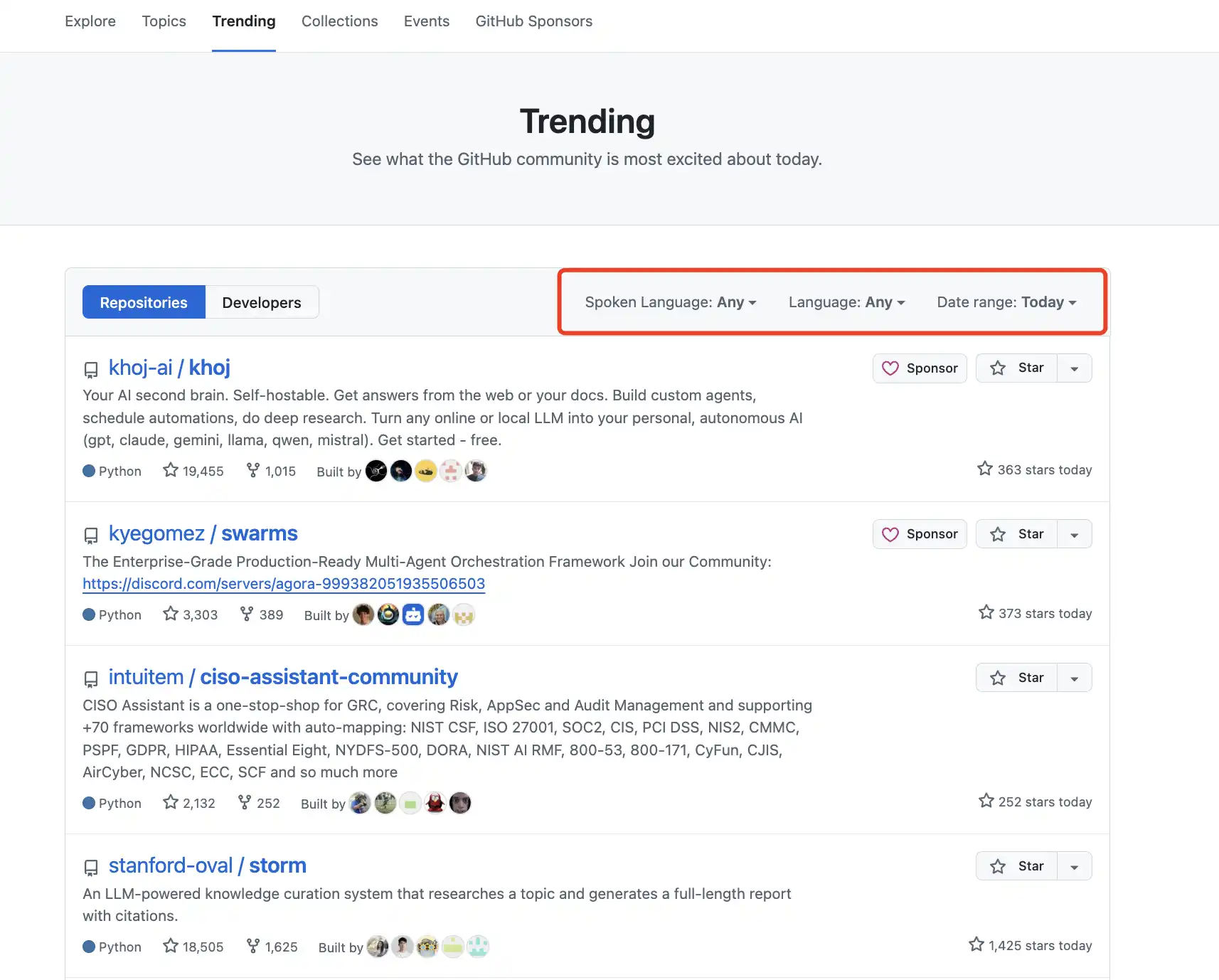
In addition to the Trending page, you can also use GitHub's advanced search function to filter by the number of Stars, programming language, update time, etc. For example, entering stars:>100 language:Python topic:AI in the search bar can help you find projects with more than 100 Stars, that use Python, and are related to "AI," laying the foundation for accurately targeting suitable Devs in the future.
In addition to checking the AI Dev's contributions on GitHub, you can also visit their profile page to see which projects they have participated in and whether they have submitted high-quality code to well-known AI frameworks. You can also learn about their truly impressive core projects in the "Pinned Repositories" section of their profile page.
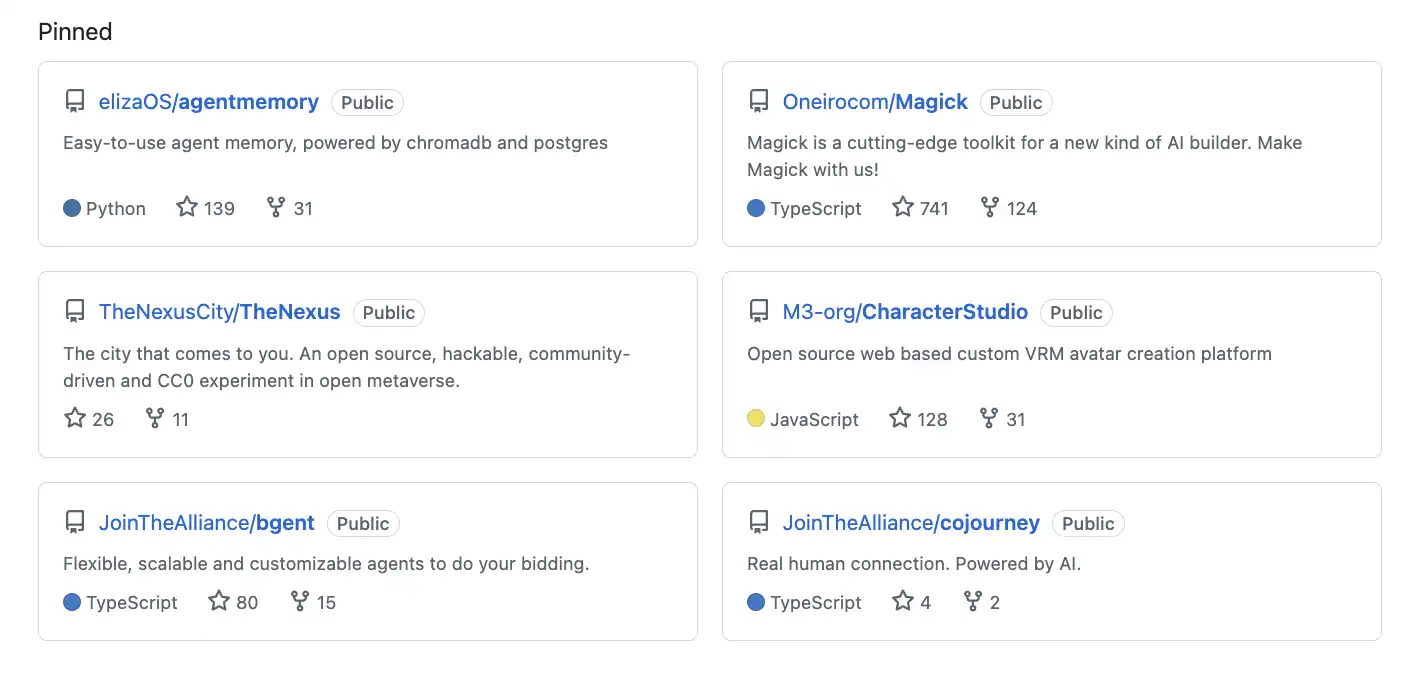
ai16z Founder Shaw's GitHub Profile
Additionally, third-party services like CodersRank, Sourcegraph, etc., analyze developers' public code to provide scores or skill tree analysis. If you want to have a more comprehensive understanding of a developer's coding habits and tech stack, you can also look into the data provided by these tools.
View README, Code, and Commit History
A project's README file usually contains the project's goals, feature overview, usage instructions, and required libraries. A detailed and logically organized README not only helps you quickly get started with the project but also reflects the developer's professionalism and friendliness to community users. If the README includes architecture diagrams, performance benchmarks, links to related papers, etc., it is a bonus to the project's professionalism.
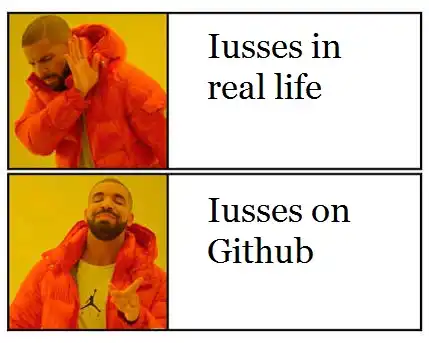
Thoroughly read through the project's code structure, module divisions, and naming conventions, which can give you a preliminary assessment of the developer's maturity in software engineering. If you frequently see them using non-Git standard commits like "Add files via upload," it likely means that the project lacks continuous development management capability and real technical support. Conversely, if the commit messages are concise and the feature divisions are clear, it indicates a more professional and traceable development process.
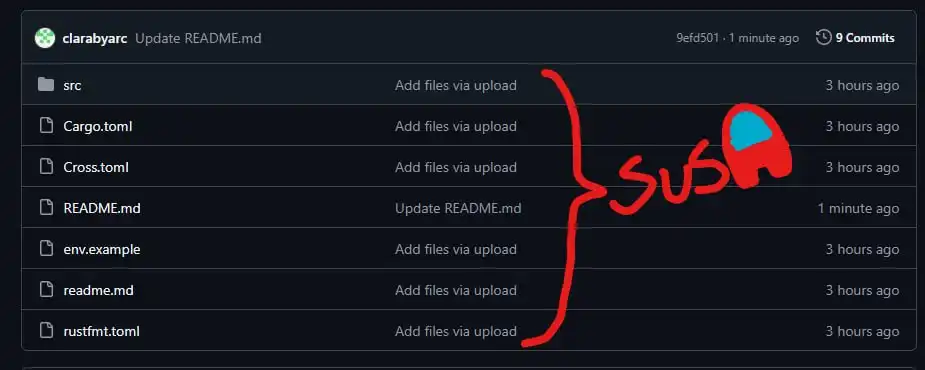
Image Source: @onlyzhynx
In AI projects, whether there are unit tests set up, continuous integration (Travis CI, GitHub Actions, etc.) is also a key indicator of whether developers care about quality. A high-level AI Dev usually combines automated testing methods to ensure the correctness and stability of the project's functionality.
Issues, Pull Requests, and Contributors Interface
In a project's Issues and Pull Requests, we can intuitively understand the developer's working style and the community's interaction level. For example, whether Issues are responded to promptly, if PRs go through a rigorous review process, and if there are sufficient reviews and tests during code merges. Excellent AI Devs usually guide new contributors through Code Reviews or provide more technical background and implementation logic in PR descriptions to help the project community quickly understand and validate new features.
If a project has a large number of Contributors that are evenly distributed, it indicates that the project has broad community support and ongoing development momentum. If only one or two people are frequently committing code, then it is necessary to delve deeper into their background and the project's scalability.
Some high-quality projects may link to external forums, Slack channels, Discord servers, etc., in their README or Issues section for discussions on the project's feature evolution, bug fixes, etc. If the user interaction in these forums is very active, it indicates that the project has a certain community foundation, which is also one of the standards to test the team.
Lastly, although reliable developer skills are crucial, emotional intelligence is also a necessary factor for a project to succeed. In the midst of the bubble brewing between AI and Crypto, if one cannot hold onto their assets due to a developer's outrageous actions overnight, perhaps we can consider a different approach. By tracking reliable Developer projects in the medium to long term, profiting from the token's cyclical uptrend can also be a more stable operational method.
You may also like

Full text of the Federal Reserve's decision: Maintain interest rates unchanged and expect one rate cut within the year, with Governor Mulan casting a dissenting vote

Guarding billions in assets, yet unable to sustain itself: Tally bids a dignified farewell after five years

SEC’s Stance on Crypto Assets: Most Not Considered Securities
Key Takeaways: The SEC’s new interpretation categorizes most crypto assets as non-securities under federal law. This move aims…

South Korea’s New Crypto Seizure Guidelines After Asset Mismanagement Incidents
Key Takeaways: South Korea’s National Police Agency (KNPA) has drafted guidelines for crypto seizure, with a focus on…

Institutional Confidence in Crypto’s 2026 Growth Trajectory
Key Takeaways: A significant 73% of institutional investors plan to increase their crypto holdings by 2026. Exchange-traded products…

Ethereum Reduces Bridge Times by 98% with Fast Confirmation Rule
Key Takeaways: Ethereum introduces the Fast Confirmation Rule (FCR) aiming to cut bridge times from L1 to L2…

Crypto Firms Advocate DeFi Education in US Colleges
Key Takeaways: Twenty-one crypto organizations have called on US colleges to integrate decentralized finance (DeFi) into their curricula…

RedotPay Reorganizes Amidst Funding Tries and IPO Goals
Key Takeaways: RedotPay is facing leadership changes and concerns over its connections with mainland China while eyeing a…

Bitcoin ETF Streak Nears October Highs While Inflows Lag Behind
Key Takeaways: US spot Bitcoin ETFs have continued their inflow streak for seven straight days, accumulating $1.2 billion…
Connecticut Suspends Bitcoin Depot as Revenue Prospects for 2026 Worsen
Key Takeaways: Connecticut halts Bitcoin Depot’s operations, citing regulatory breaches related to the Money Transmission Act. Bitcoin Depot…

DAO Governance Platform Tally Shuts Down Due to Market Challenges
Key Takeaways: Tally, after operating for five years, is shutting down due to a lack of viable business…
Trump Memecoin Shows Volatility Amid Mar-a-Lago Event
Key Takeaways: TRUMP memecoin holders surpassed 83 wallets with over one million tokens after a luncheon announcement with…
Bitcoin Surge in Australian E-commerce Faces Banking Hurdles: In-depth Analysis
Key Takeaways: Cryptocurrency usage in Australia for purchasing goods and services doubled from 6% to 12% in 2026.…

Meta Shuts Down Horizon Worlds VR for Mobile-Centric Strategy
Key Takeaways: Meta is transitioning Horizon Worlds from a VR to a mobile-centric platform starting June 2026. The…

Bitcoin Exchange Inflows Surge Amidst $75,000 Resistance
Key Takeaways: Bitcoin inflows to exchanges have spiked to 6,100 BTC, hinting at potential selling pressure. The large…
Bitrefill Identifies Lazarus Group Behind Cyberattack and Stolen Funds
Key Takeaways: Bitrefill suffered a cyberattack on March 1, likely orchestrated by the infamous Lazarus Group using sophisticated…
Coin Center Advocates for Rulemaking Over No-Action Letters in Crypto Regulation
Key Takeaways: Coin Center challenges the SEC’s reliance on no-action letters, promoting a shift toward comprehensive rulemaking in…
On the eve of the Fed meeting, are traders starting to bet on a rate hike?
Full text of the Federal Reserve's decision: Maintain interest rates unchanged and expect one rate cut within the year, with Governor Mulan casting a dissenting vote
Guarding billions in assets, yet unable to sustain itself: Tally bids a dignified farewell after five years
SEC’s Stance on Crypto Assets: Most Not Considered Securities
Key Takeaways: The SEC’s new interpretation categorizes most crypto assets as non-securities under federal law. This move aims…
South Korea’s New Crypto Seizure Guidelines After Asset Mismanagement Incidents
Key Takeaways: South Korea’s National Police Agency (KNPA) has drafted guidelines for crypto seizure, with a focus on…
Institutional Confidence in Crypto’s 2026 Growth Trajectory
Key Takeaways: A significant 73% of institutional investors plan to increase their crypto holdings by 2026. Exchange-traded products…
Ethereum Reduces Bridge Times by 98% with Fast Confirmation Rule
Key Takeaways: Ethereum introduces the Fast Confirmation Rule (FCR) aiming to cut bridge times from L1 to L2…


 App
App