
Iranian Exchange Outflow Surges 700% Amid Stiffening USDT Sanctions

 Prefer us on Google

Key Takeaways:
- Iranian cryptocurrency exchange outflows surged by 700% following military strikes, signaling rapid capital flight from the country.
- Severe internet restrictions in Iran led to an 80% collapse in trading volumes, exacerbating the crisis.
- Tether (USDT) has become a critical tool for bypassing traditional banking systems, drawing significant regulatory scrutiny.
- Potential future implications include either worsening economic isolation or a temporary stabilization if sanctions and internet constraints ease.
WEEX Crypto News, 2026-03-03 18:19:53
Unveiling the Sudden Capital Exodus in Iranian Crypto Markets
In the heart of Iran’s rapidly evolving financial landscape, the aftermath of recent U.S. and Israeli military strikes has triggered a dramatic response in the cryptocurrency markets. A blog by blockchain analytics company, Elliptic, reveals that outflows from Iranian exchanges have skyrocketed by a staggering 700% to nearly $3 million. The urgency of this exodus reflects users hastily transferring their assets to overseas exchanges, effectively bypassing the traditional banking mechanisms.
This upheaval points to severe market distress, indicating an urgent rush for safety and stability. The typical circulation of capital within Iran’s economic confines is disrupted, redirecting financial resources towards more secure offshore platforms. Given the already stringent sanctions environment, this move underscores the fragility of the local cryptocurrency sphere.
Analyzing the Deep Dive: Outflows Defying Volume Collapse
Elliptic’s data sheds light on the dramatic shifts occurring within Iran’s largest exchange, Nobitex. In just 48 hours post-strikes, net outflows have ballooned by 700%. This extraordinary exit is taking place alongside a broader market collapse, with trading volumes across Iranian platforms plummeting by about 80% from February 27 to March 1 amidst severe internet limitations.
While Bitcoin has bounced back globally from Iran-related shocks, Iranian traders have not waited for market stabilization. Instead, they have urgently repositioned their assets, suggesting a decisive preference for capital security over potential gains from price fluctuations. TRM Labs attributes this volume decrease to “mechanical access limitations,” rather than a systemic failure, signifying that the infrastructure remains intact but inaccessible.
The sustained level of outflows risks precipitating a liquidity crisis for domestic exchanges. As users drain order books, capital is transitioning from centralized exchanges to more discreet decentralized wallets—tools notoriously more resistant to regulatory oversight and seizure.
The Role of USDT: A Catalyst or a Target?
A critical component of this capital shift is the role of Tether (USDT), a preferred tool for circumventing conventional banking pathways. Iran’s central bank’s directive to suspend the USDT/toman trading pair on major platforms like Nobitex and Wallex severed a vital link between Iran’s fiat currency and the global crypto economy. With USDT’s liquidity and dollar stability, it provides a reliable channel for evasion and unregulated flows, although it is increasingly under regulatory scrutiny.
The focus on USDT highlights vulnerabilities within Iran’s crypto infrastructure. International regulators, especially the Office of Foreign Assets Control (OFAC), are honing their abilities to trace on-chain interactions between exchanges and sanctioned entities. The halt to USDT pairings reflects Tehran’s awareness of this heightened scrutiny.
If regulatory pressures lead to sterner sanctions impacting Tether rails, Iranian exchanges might find themselves further isolated from global liquidity pools. Such a scenario could drive financial transactions into less visible, peer-to-peer networks, posing challenges for compliance and regulation globally.
Economic Implications: A Double-Edged Sword of Control vs. Isolation
The current scenario poses two starkly divergent potential outcomes for the regional cryptocurrency market. On one hand, escalating military tensions could further depress the Iranian rial’s value, pushing another wave of capital into digital assets, likely compounded by aggressive secondary sanctions from the U.S. targeting relevant exchanges and protocols.
Conversely, should internet restrictions relax and USDT trading be reinstated, there’s potential for stabilization, reflecting TRM Labs’ previous “risk containment” assessments. Nonetheless, the massive outflow already recorded undermines confidence in domestic platforms, suggesting that long-term trust may have been permanently shaken.
For global traders, these dynamics signal an increasingly perilous terrain for liquidity arising from the region. Compliance barriers will demand strengthening to meet these evolving challenges, ensuring adherence to international regulation and minimizing exposure to sanctioned activities.
Ultimately, the Iranian experience underscores a pivotal moment in the intersection of geopolitical tensions and digital currencies. As markets attempt to navigate these tumultuous waters, the resilience of both institutional and retail actors will be put to the test, with implications resonating far beyond regional borders.
Common Questions About Iranian Crypto Outflows
Why has there been a sudden spike in Iranian exchange outflows?
The surge in exchange outflows in Iran has been driven by heightened geopolitical tensions following recent U.S. and Israeli military strikes. This has led to a rapid movement of assets as users seek to protect their capital from local uncertainties by moving it to international platforms.
How have internet restrictions impacted Iranian crypto trading?
The internet restrictions implemented in Iran caused a drastic decline in trading volumes, plummeting by around 80%. This has limited access to exchange platforms, further compounding the challenges faced by traders and reinforcing the surge in asset withdrawals.
What role does Tether (USDT) play in Iran’s crypto ecosystem?
Tether (USDT) serves as a crucial conduit for capital movement within and outside Iran’s borders due to its liquidity and stability. However, its role has drawn significant regulatory attention as it is often used to bypass traditional banking restrictions.
What are the potential future scenarios for Iran’s crypto market?
Iran’s crypto market could follow one of two paths: heightened economic isolation due to potential sanctions, or a reprieve through eased restrictions and restored USDT trading. Both options carry significant implications for liquidity and market stability.
How should global traders respond to current Iranian crypto market dynamics?
Global traders should stay vigilant of the evolving regulatory landscape and the increasing risks associated with Iranian cryptocurrency transactions. Strengthening compliance protocols and closely monitoring international legal frameworks will be crucial to navigating these complexities.
Disclaimer: This content is provided for general branding and informational purposes only and doesn't constitute financial, investment, legal, or tax advice. Any events, rewards, online events, or related information mentioned herein should not be considered a recommendation, solicitation, or invitation to purchase, sell, trade, or otherwise deal in any crypto assets or to use any services. Crypto assets are highly volatile and may result in loss. WEEX services and online events may not be available in all regions and are subject to applicable laws, regulations, and eligibility requirements. You are responsible for ensuring that your use of WEEX services complies with local laws and for carefully assessing the risks before participating in any crypto-related activities.
You may also like

Major Update for ChatGPT: Cross-Platform Functionality, One-Click Website Creation, and Lower Costs

BTC Challenges 64,000 After Breaking 63,000, Market Trading 'Manageable Risks'
As the Bubble Bursts, Who Dominates Attention in the AI Era? A 2026 Guide to Influential AI KOLs in China and the UK

Old Money in Crypto Shifts: Paradigm Raises $1.2 Billion, Half Bet on AI and Robotics

Bitdeer unveils $36M Nevada factory to shake up Bitcoin mining

Perplexity Fine-Tuned a Chinese AI Model to Match Claude Opus 4.8 at One-Third the Cost

Bank of Korea defends bank-first stablecoin plan amid bill deadlock
JPMorgan says bitcoin's main risk isn't Strategy, but blockchain adoption that doesn't benefit public chains and tokens

Fear & Greed Index Today: What Extreme Fear Means for Crypto, Stocks and Gold
Labour MPs Push to Make UK Crypto Donation Ban Permanent

Supreme Court ruling expanding Trump's authority over federal agencies raises questions for SEC, CFTC as crypto rulemaking advances

'Bottom building in progress': Analysts say bitcoin holder capitulation signals late-stage bear market
A Comprehensive Analysis: Starting from 1996, Who is Laying the Foundation for the Next Generation of Capital Markets
Luke Dashjr, the Biggest Anti-Spammer of Bitcoin, Inscribed Phrases on the Network in 2011

Whales bought 270,000 BTC while ETFs bled $7 billion. One side is wrong

The crypto IPO class of 2025-26 is down as much as 89%. Autopsy of a listing boom
Robinhood Chain Mining Guide: A Comprehensive Tutorial from Cross-Chain to Memecoin
BitGo CEO says single-digit percentages of bitcoin's supply are 'probably right' for large holders amid Strategy's sale

Beyond Private Keys: How to Safeguard the Security Boundaries of Web3 from Wallets, L2 to Supply Chains?

Vanguard Enters the Market, Opening a New Crypto Gateway for 50 Million Traditional Investors

Why the OUSD Alliance of 150 Companies Still Cannot Shake USDT and USDC?
Citigroup Analysis: Is There Still 47% Upside for Nvidia? Can Rubin and CPO Deliver?
WEEX API Fast Connect: Turn Every Sign-In Into a Live Trader in Under 10 Seconds
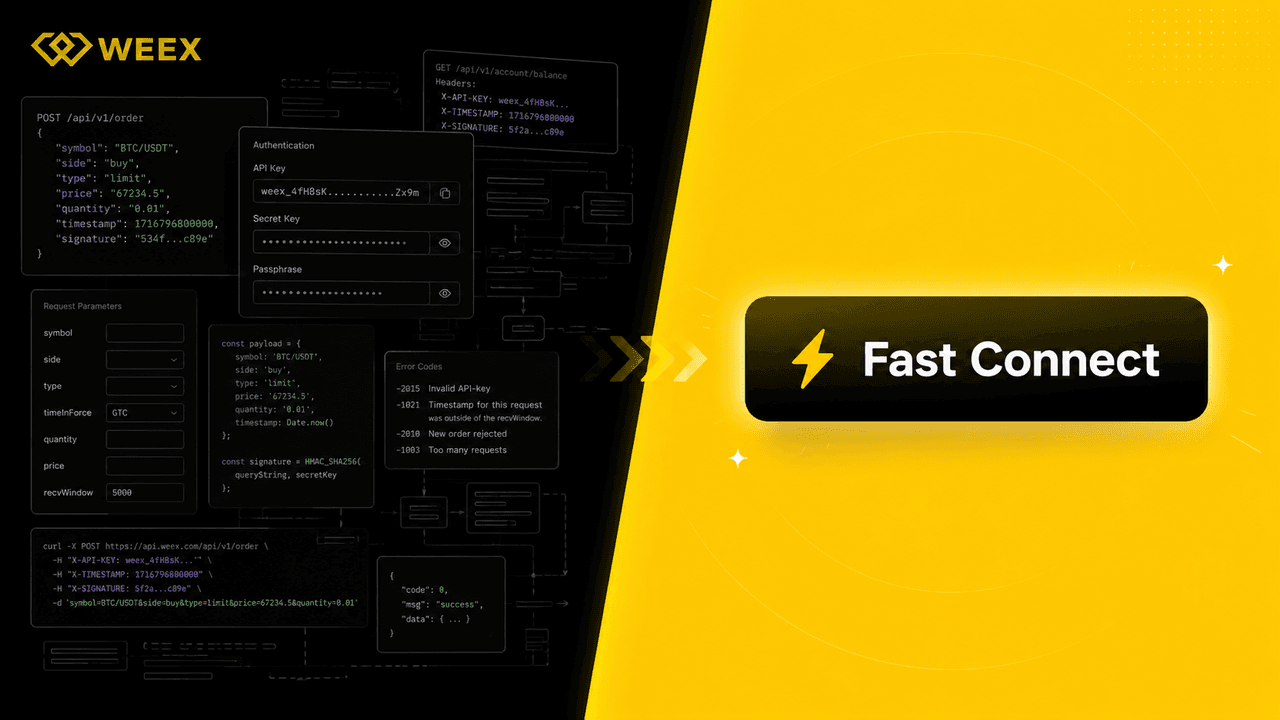
WEEX API Fast Connect is a one-click OAuth authorization system that lets your users link their WEEX account without ever touching an API key. Frictionless onboarding, faster conversions, higher retention — built for WEEX Broker partners.
Bitcoin's dwindling exchange reserves don't pack the same bullish punch anymore

From Le Mans to the Rollercoaster: Carl Moon Takes On Portimão
Crypto world renowned KOL and racing driver Carl Moon, backed by WEEX, heads to the Ferrari Challenge Portugal round at the Algarve International Circuit, July 16–19, fresh off a podium finish at Le Mans. Here's why this race is one to watch.
Fast execution. Split-second accuracy. Security that never blinks. That's WEEX — and that's exactly how Carl races.

The Downfall of a Public Company: A $1.46 Billion Bet on WLFI, $540 Million Went to the Trump Family
Dragonfly Partner: BTC is Intergenerational Wealth, Optimistic About ETH and SOL
Goldman Sachs Calls to Go Long on Chinese AI: $4 Trillion Market Value Behind, Global Funds Only Allocated 1.2%
The New Landscape of Cryptocurrency in Europe: Why Germany Takes Center Stage?
Robinhood vs xStocks: Stock Tokenization Shouldn't Just Focus on Ticker On-Chain
Major Update for ChatGPT: Cross-Platform Functionality, One-Click Website Creation, and Lower Costs
BTC Challenges 64,000 After Breaking 63,000, Market Trading 'Manageable Risks'
As the Bubble Bursts, Who Dominates Attention in the AI Era? A 2026 Guide to Influential AI KOLs in China and the UK
Old Money in Crypto Shifts: Paradigm Raises $1.2 Billion, Half Bet on AI and Robotics
Bitdeer unveils $36M Nevada factory to shake up Bitcoin mining
Perplexity Fine-Tuned a Chinese AI Model to Match Claude Opus 4.8 at One-Third the Cost

Contents
Latest articles





Latest coin listings on WEEX


