
Marc Zeller’s Aave Chan Initiative to Depart Aave Amidst Governance Challenges

 Prefer us on Google
Key Takeaways:
- Aave Chan Initiative (ACI) decides not to renew its involvement with Aave DAO amid intensifying governance disputes.
- The departure of ACI marks the second significant contributor exit from Aave, following BGD Labs’ decision to cease contributions.
- A governance dispute triggered in December 2025 highlights issues of control, accountability, and fund allocation within Aave.
- ACI intends to terminate its GHO stablecoin funding arrangement early, seeking a lump sum payout as it prepares for a structured exit.
WEEX Crypto News, 2026-03-03 18:26:01
Introduction
In a notable shakeup within the decentralized finance sector, the Aave Chan Initiative, a prominent delegate and service provider within the Aave DAO ecosystem, has announced its decision to step away. The departure signals growing unrest and governance challenges within Aave’s evolving landscape, following the exit of another key contributor, BGD Labs, just weeks earlier. The move comes amidst ongoing debates over governance transparency, control, and the distribution of funds—issues that have been simmering within the Aave community.
ACI’s Planned Departure
The Aave Chan Initiative, spearheaded by Marc Zeller, has emphasized its intention to withdraw from its commitments to the Aave DAO by July 2026. Aware of the implications of this exit, Zeller has outlined a four-month wind-down plan to ensure a smooth transition. This involves maintaining governance roles to execute remaining commitments and ensuring an orderly handover of responsibilities and infrastructure.
This announcement follows a closely related development involving BGD Labs, a core technical contributor to Aave. As a foundational member of the protocol, BGD Labs revealed its plans to end contributions by April due to disagreements over strategic direction and governance practices. This decision has sent ripples through the community, highlighting underlying concerns about governance tensions within Aave.
Exploring the Governance Dispute
Central to Aave’s current governance upheaval are issues of transparency and decision-making control within the DAO. The dispute dates back to December 2025 when EzR3aL, a community member, raised concerns over fee allocations from the CoW Swap integration. Instead of funds accruing to the DAO treasury, fees were redirected to Aave Labs without prior governance approval or announcement. This action ignited debates regarding accountability and the diversion of revenues away from token holders.
In response to these concerns, BGD Labs proposed transferring crucial Aave brand assets—domains, trademarks, and social media accounts—under DAO control. However, efforts to cement this change through a Snapshot vote hit a roadblock amidst abstentions and against a backdrop of opposition from key figures, including Aave’s founder Stani Kulechov.
The Proposal for Revenue Reallocation
As tensions simmered, Kulechov advanced a proposal titled “How AAVE will win” that sought to reorient revenue streams toward the DAO. This plan suggested redirecting all revenue from Aave-branded ventures, encompassing products like frontend apps, swaps, Aave Pro, and the Aave Card, into the DAO’s treasury. The aim was to secure $51 million in funding, with allocations comprising stablecoins and 75,000 AAVE tokens earmarked for Aave v4 development.
Zeller subsequently scrutinized Aave Labs, presenting an accountability analysis highlighting historical funding estimates of approximately $86 million. He pressed for greater transparency and questioned the return on investment achieved through these funds.
Challenges in Governing Autonomy
The resultant conversations on governance underscored the prevailing issues of control within Aave. The successful passage of the “How AAVE will win” proposal with 52.58% support raised questions over voting power dynamics. Zeller argued that voting influence significantly tied to Aave Labs skewed the results. By excluding roughly 233,000 AAVE, identified as Labs-linked, the outcome would have shifted towards 497,100 NAY against approximately 387,000 YAE—suggesting ongoing centralization concerns.
The existing governance protocol thus faces criticism for not being sufficiently decentralized to honor existing commitments. Zeller pointed to this governance stasis as a prime reason for ACI’s withdrawal from the Aave ecosystem despite a desire for professional execution of their exit strategy.
Next Steps for ACI
As ACI initiates its withdrawal, focus shifts to its GHO stablecoin funding stream. A proposal submitted by ACI suggests converting the stream into a lump sum payment to facilitate an orderly transition. This seeks to mitigate dependence on a governance process dominated by a single entity with sufficient voting power to cancel active streams.
In case the DAO declines this proposal, ACI warns it would interpret this as an indication that Aave has no intention of honoring commitments, prompting an immediate cessation of activities and contract obligations. This aspect of the transition remains pivotal in shaping the future interactions between ACI and Aave.
Conclusion
The impending withdrawal of the Aave Chan Initiative from the Aave ecosystem marks a critical juncture within the platform’s governance evolution. It highlights ongoing challenges in maintaining transparency, decentralization, and accountability—ideals foundational to the ethos of decentralized finance. As Zeller bids farewell to Aave, best wishes accompany other remaining service providers, including Chaos Labs, TokenLogic, LlamaRisk, and Certora, as they continue contributing to the protocol’s success.
FAQ
What is the primary reason behind ACI’s departure from Aave?
ACI’s decision to leave Aave primarily stems from growing governance tensions, particularly disputes concerning transparency, control, and fund allocation.
How does ACI plan to transition its responsibilities upon leaving Aave?
ACI has laid out a four-month wind-down plan focused on governance activities, fulfilling outstanding commitments, and ensuring an orderly infrastructure transition to mitigate disruptions.
What was the catalyst for the governance dispute at Aave?
The dispute was catalyzed by concerns over revenue allocations from the CoW Swap integration being routed to Aave Labs without governance approval, sparking broader debates on control and accountability.
What was proposed in the “How AAVE will win” framework?
The proposal sought to redirect 100% of revenue from Aave-branded products to the DAO treasury in exchange for $51 million in funding to support the ongoing development of Aave v4, currently in testnet phase.
How does the governance dispute affect Aave’s future?
The dispute emphasizes the need for more decentralized governance and transparent processes within Aave, which are essential for fostering a robust and sustainable platform moving forward.
Disclaimer: This content is provided for general branding and informational purposes only and doesn't constitute financial, investment, legal, or tax advice. Any events, rewards, online events, or related information mentioned herein should not be considered a recommendation, solicitation, or invitation to purchase, sell, trade, or otherwise deal in any crypto assets or to use any services. Crypto assets are highly volatile and may result in loss. WEEX services and online events may not be available in all regions and are subject to applicable laws, regulations, and eligibility requirements. You are responsible for ensuring that your use of WEEX services complies with local laws and for carefully assessing the risks before participating in any crypto-related activities.
You may also like

Major Update for ChatGPT: Cross-Platform Functionality, One-Click Website Creation, and Lower Costs

BTC Challenges 64,000 After Breaking 63,000, Market Trading 'Manageable Risks'

As the Bubble Bursts, Who Dominates Attention in the AI Era? A 2026 Guide to Influential AI KOLs in China and the UK

Old Money in Crypto Shifts: Paradigm Raises $1.2 Billion, Half Bet on AI and Robotics

Bitdeer unveils $36M Nevada factory to shake up Bitcoin mining

Perplexity Fine-Tuned a Chinese AI Model to Match Claude Opus 4.8 at One-Third the Cost

Bank of Korea defends bank-first stablecoin plan amid bill deadlock
JPMorgan says bitcoin's main risk isn't Strategy, but blockchain adoption that doesn't benefit public chains and tokens

Fear & Greed Index Today: What Extreme Fear Means for Crypto, Stocks and Gold
Labour MPs Push to Make UK Crypto Donation Ban Permanent

Supreme Court ruling expanding Trump's authority over federal agencies raises questions for SEC, CFTC as crypto rulemaking advances

'Bottom building in progress': Analysts say bitcoin holder capitulation signals late-stage bear market

A Comprehensive Analysis: Starting from 1996, Who is Laying the Foundation for the Next Generation of Capital Markets
Luke Dashjr, the Biggest Anti-Spammer of Bitcoin, Inscribed Phrases on the Network in 2011

Whales bought 270,000 BTC while ETFs bled $7 billion. One side is wrong

The crypto IPO class of 2025-26 is down as much as 89%. Autopsy of a listing boom
Robinhood Chain Mining Guide: A Comprehensive Tutorial from Cross-Chain to Memecoin
BitGo CEO says single-digit percentages of bitcoin's supply are 'probably right' for large holders amid Strategy's sale

Beyond Private Keys: How to Safeguard the Security Boundaries of Web3 from Wallets, L2 to Supply Chains?

Vanguard Enters the Market, Opening a New Crypto Gateway for 50 Million Traditional Investors

Why the OUSD Alliance of 150 Companies Still Cannot Shake USDT and USDC?
Citigroup Analysis: Is There Still 47% Upside for Nvidia? Can Rubin and CPO Deliver?
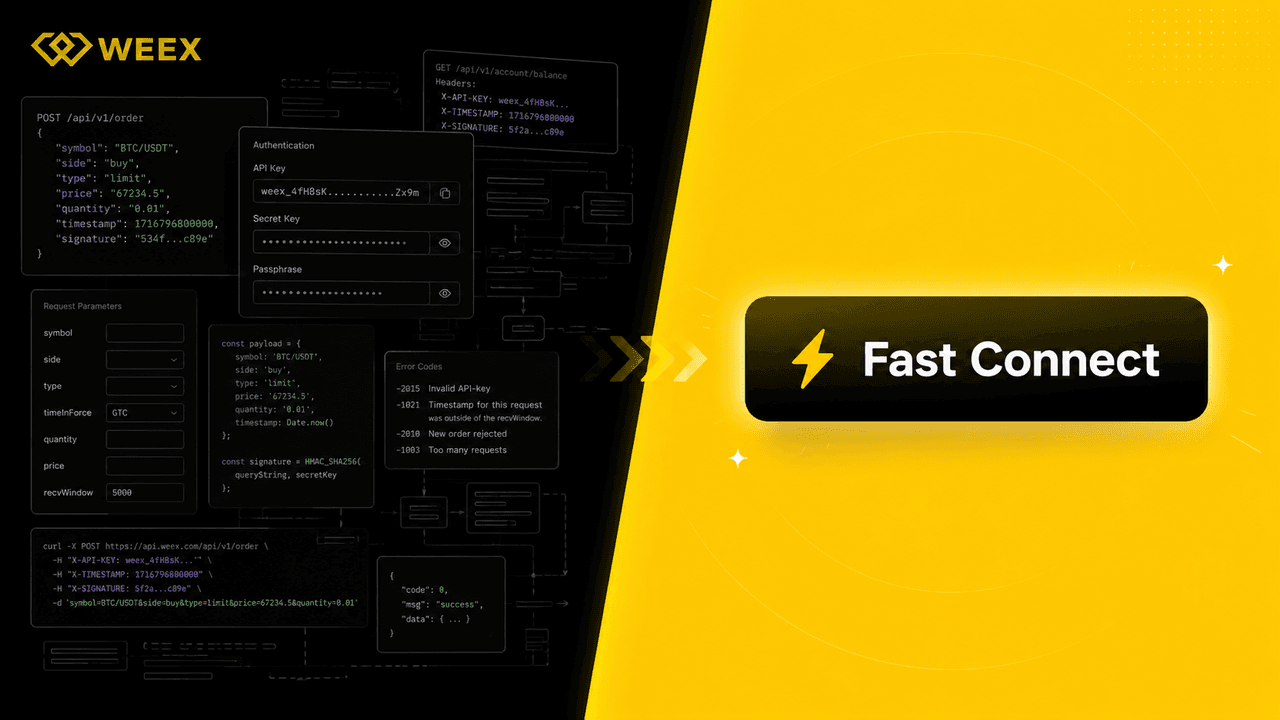
WEEX API Fast Connect: Turn Every Sign-In Into a Live Trader in Under 10 Seconds
WEEX API Fast Connect is a one-click OAuth authorization system that lets your users link their WEEX account without ever touching an API key. Frictionless onboarding, faster conversions, higher retention — built for WEEX Broker partners.
Bitcoin's dwindling exchange reserves don't pack the same bullish punch anymore
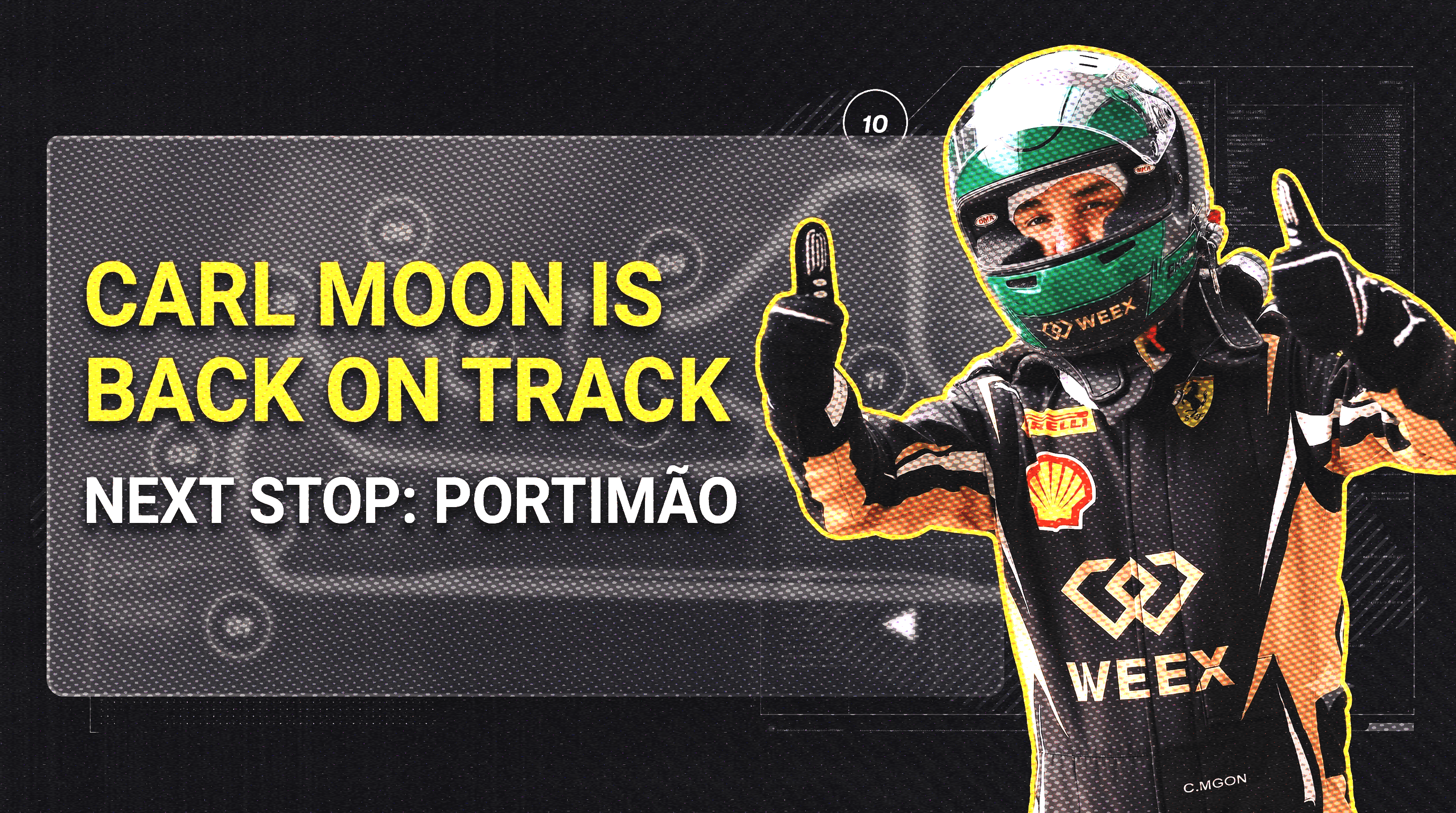
From Le Mans to the Rollercoaster: Carl Moon Takes On Portimão
Crypto world renowned KOL and racing driver Carl Moon, backed by WEEX, heads to the Ferrari Challenge Portugal round at the Algarve International Circuit, July 16–19, fresh off a podium finish at Le Mans. Here's why this race is one to watch.
Fast execution. Split-second accuracy. Security that never blinks. That's WEEX — and that's exactly how Carl races.

The Downfall of a Public Company: A $1.46 Billion Bet on WLFI, $540 Million Went to the Trump Family
Dragonfly Partner: BTC is Intergenerational Wealth, Optimistic About ETH and SOL
Goldman Sachs Calls to Go Long on Chinese AI: $4 Trillion Market Value Behind, Global Funds Only Allocated 1.2%
The New Landscape of Cryptocurrency in Europe: Why Germany Takes Center Stage?
Robinhood vs xStocks: Stock Tokenization Shouldn't Just Focus on Ticker On-Chain
Major Update for ChatGPT: Cross-Platform Functionality, One-Click Website Creation, and Lower Costs
BTC Challenges 64,000 After Breaking 63,000, Market Trading 'Manageable Risks'
As the Bubble Bursts, Who Dominates Attention in the AI Era? A 2026 Guide to Influential AI KOLs in China and the UK
Old Money in Crypto Shifts: Paradigm Raises $1.2 Billion, Half Bet on AI and Robotics
Bitdeer unveils $36M Nevada factory to shake up Bitcoin mining
Perplexity Fine-Tuned a Chinese AI Model to Match Claude Opus 4.8 at One-Third the Cost

Contents
Latest articles




Latest coin listings on WEEX


