
- Buy Crypto
- Markets
 Futures
- Spot
- Copy Trade
- Earn
- More
When Kevin Wismar speaks, which assets will rise?

Original Authors: @Globalflows, @aleabitoreddit
Translation: Peggy, BlockBeats
Editor's Note: Kevin Warsh's appointment as Fed Chair is far more than just a personnel change. It signals a shift in market pricing logic itself. Under Warsh's framework, inflation is being redefined as a problem of fiscal recklessness and government inefficiency, while AI is seen as a key tool to lower costs, boost productivity, and reshape governance capabilities.
As AI systems like Palantir are actually deployed in areas such as federal spending audits, housing finance, and healthcare reimbursement, this institutional shift is moving from ideology to implementation, and is beginning to manifest in the market as structural differentiation and repricing.
After AI and fiscal discipline have become the policy mainstream, which assets will receive a new pricing premium, and which business models will face systemic reassessment, are becoming the questions that the market must answer. The following is the original text:
Kevin Warsh has been appointed as the new Fed Chair, a signal that goes far beyond a mere change in personnel, but heralds a deep-seated shift in the global monetary policy paradigm and the AI arms race. The connection between the two is much closer than most people realize.
AI is becoming the sole asymmetric leverage point determining the future landscape, and Warsh's appointment is part of an institutional arrangement focused on this core goal.
Discussions surrounding him, such as "Will he cut interest rates?", "Is he a hawk or a dove?", "How will he handle the Fed's balance sheet?" are certainly important, but these questions all overlook one fact: a larger institutional transition is already underway.
What is truly key is not short-term policy orientation, but why Kevin Warsh, and how he fits into this emerging new system. Understanding this will be the most crucial variable as we move towards 2026.
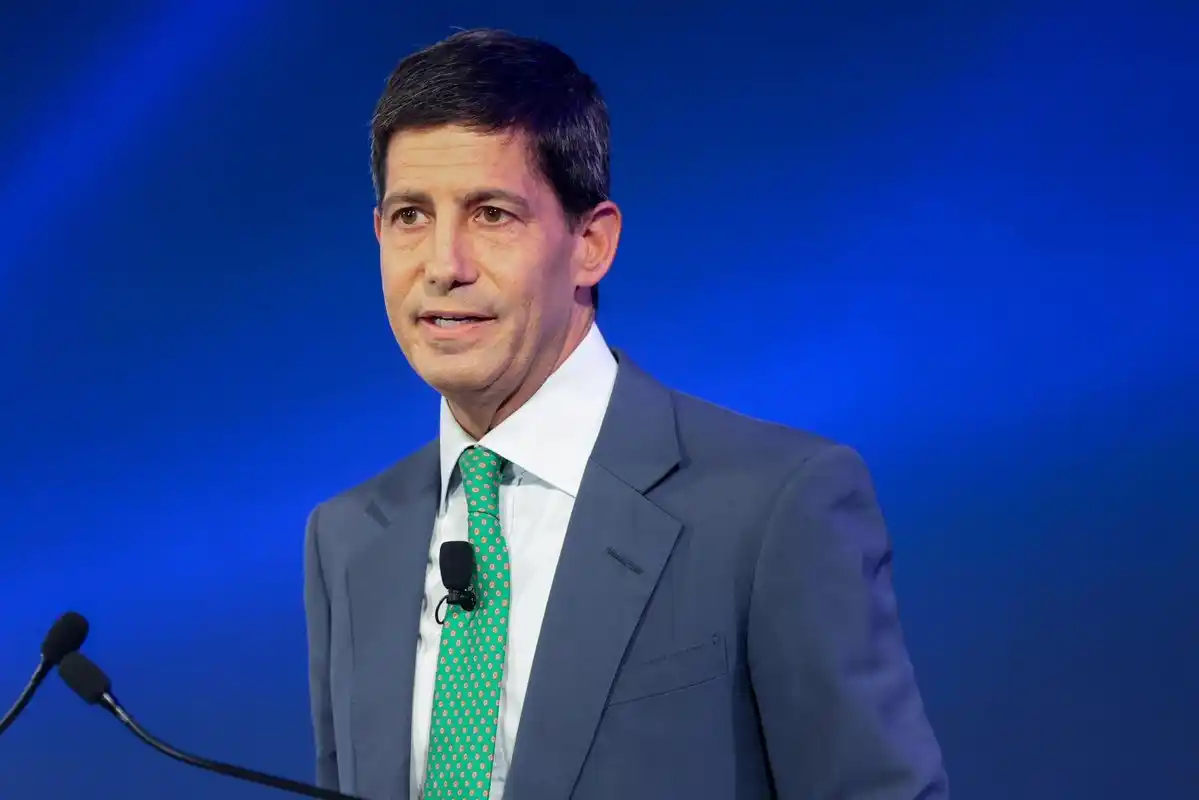
From Personnel Appointment to Institutional Signal: Why Warsh?
Warsh is not a traditional "policy technocrat." He has long been seen as someone with a systemic understanding of global capital flows, financial market structure, and institutional incentives.
More importantly, he is not a lone figure.
Warsh has long maintained close ties with Druckenmiller, Bezos, and Thiel, all of whom have deep intersections with Palantir. Druckenmiller has publicly praised Warsh's understanding of global capital flows and financial market structure.
During an interview with Bloomberg, Drew Kantermiller even referred to Wach as his "trusted advisor."
But this association goes even further: Kantermiller himself is an early investor in Palantir and has a close relationship with its co-founder and CEO, Alex Kap. (Related reading: Interview Link)
Why is this important? Because Kevin Wach himself also has a direct connection to Palantir.
In 2022, Alex and Kevin recorded an interview discussing the world's shift towards greater disorder and higher levels of complexity.
As they said in the interview, "Tomorrow, complexity will experience a quantum leap."
This is not an empty statement of technological optimism, but a foresight into the upcoming changes in national governance, financial systems, and macro stability.
Palantir: the "execution layer" of institutional transition
To understand Wach is to not evade Palantir.
Palantir's key role lies in the fact that the company is gradually becoming the "operational hub" of the U.S. federal government's anti-fraud system. Currently, 42% of Palantir's revenue comes from the U.S. government, and its technology is being deployed across multiple government departments to identify and curb large-scale fraudulent activities and excessive, inefficient government spending.
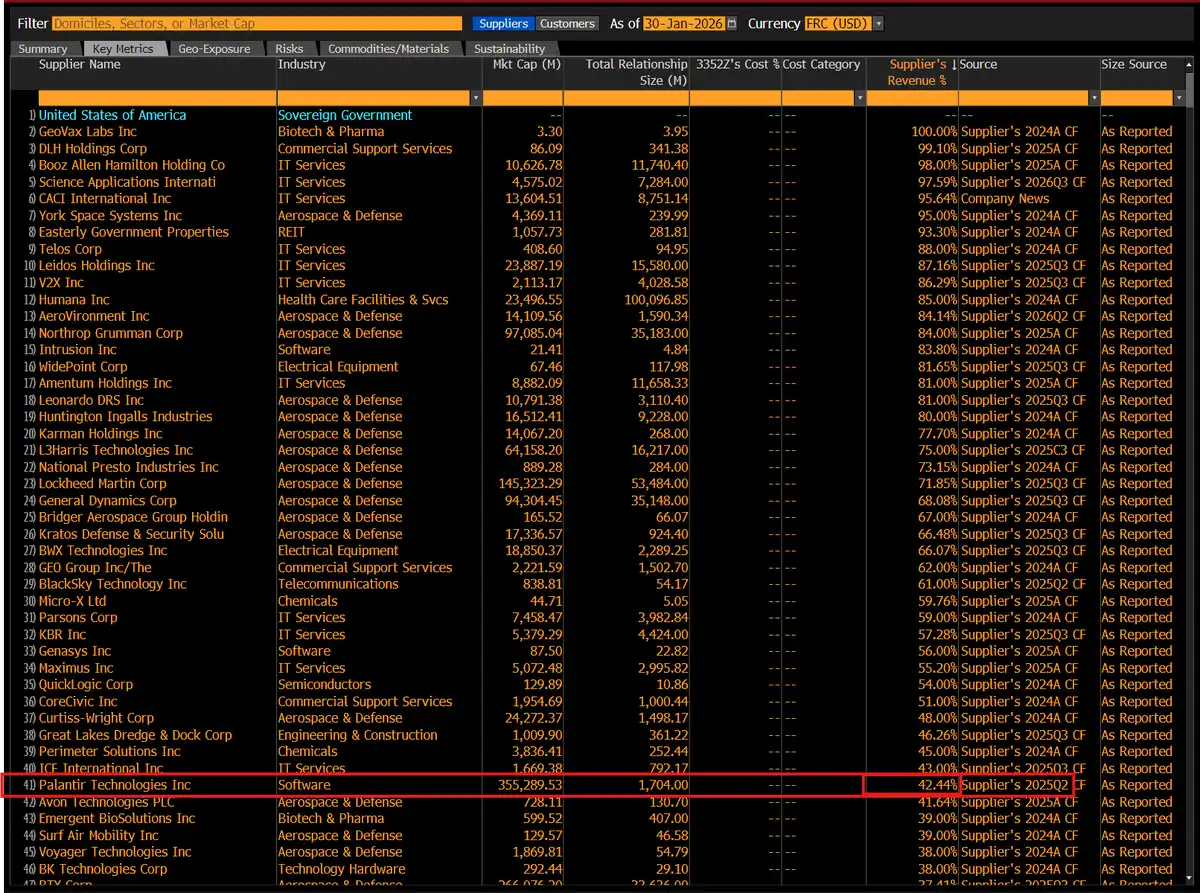
Why is this important?
Because Palantir is being used to systematically address excessive waste and various fraud issues in government spending. Its technology is landing in multiple federal agencies as a key tool to identify abnormal fund flows and clean up redundant expenditures.
SBA: From a Single State to Nationwide "Zero Tolerance" Settlement
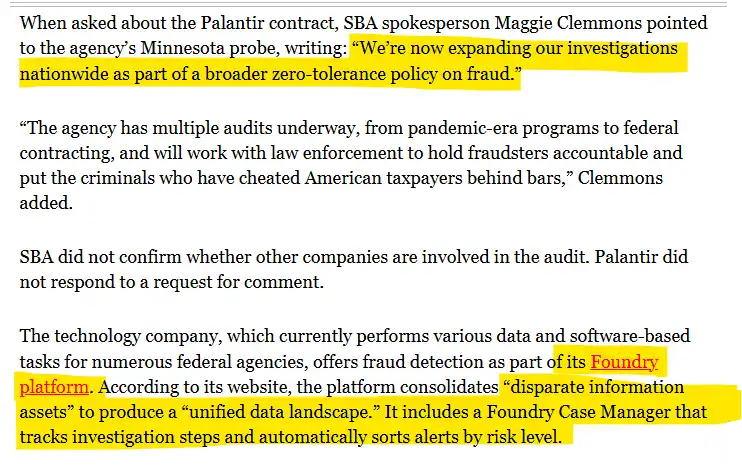
An emblematic example comes from the Small Business Administration (SBA) of the United States.
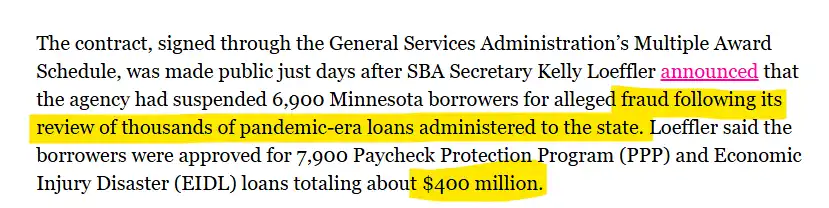
While investigating loan programs during the pandemic, the SBA found widespread misconduct in Minnesota: involving 6,900 borrowers, about 7,900 PPP and EIDL loans, totaling approximately $400 million.
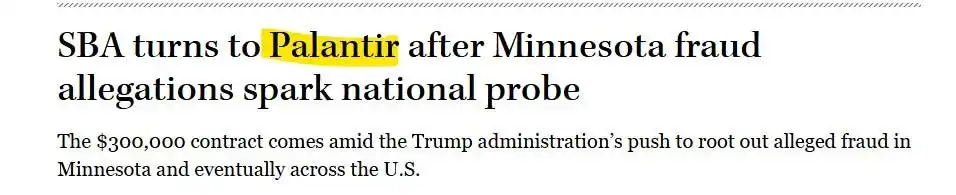
In this context, the SBA introduced Palantir and explicitly stated: the investigation will expand from a single state to national levels as a "zero tolerance" systemic anti-fraud action.
According to relevant documents, Palantir, through its Foundry platform, integrates government data scattered across different agencies and systems, tracks investigation processes, and prioritizes leads based on risk levels. This means that Palantir is no longer just providing analytical tools but is deeply embedded in the federal government's audit and anti-fraud workflows.
Fannie Mae: Systemic Pre-Audit in the Housing Finance System
A similar logic is also unfolding in the housing finance system.
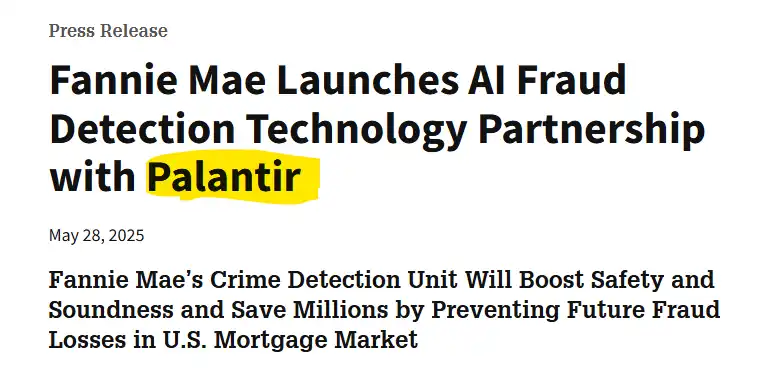
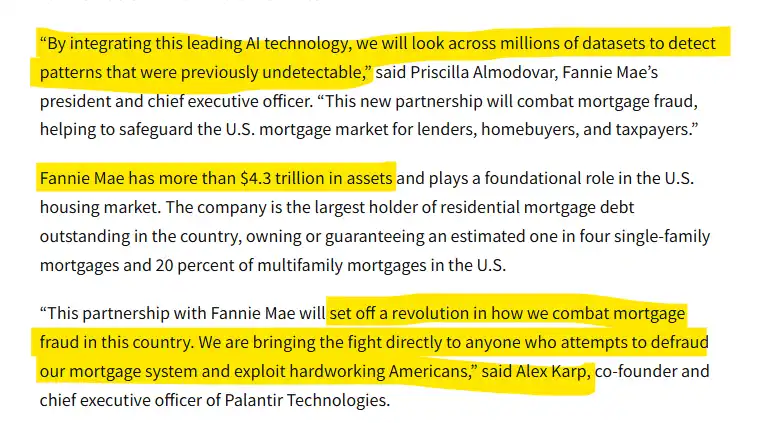
Fannie Mae has formally partnered with Palantir on AI anti-fraud technology to incorporate Palantir's AI capabilities into its crime detection system. This is used to identify fraud patterns in millions of datasets that were previously difficult to detect, aiming to reduce future losses in the U.S. mortgage market.
The background of this collaboration is particularly crucial: Fannie Mae manages over $4.3 trillion in assets and plays a foundational role in the U.S. housing finance system, covering nearly a quarter of single-family home mortgages and 20% of multi-family home mortgages. Fannie Mae emphasizes that this move will enhance the overall security and soundness of the mortgage market, while Palantir CEO Alex Karp states outright that this collaboration will "change the way America fights mortgage fraud" by directly incorporating anti-fraud capabilities at the system level.
So, what is the "connection" between them? The answer lies in the fact that the federal government is increasingly deploying Palantir's anti-fraud capabilities across various sectors.
This indicates that Wo's "financial-type inflation theory" is not just a concept at the academic level but is being translated into executable, auditable, and accountable government capabilities through AI systems like Palantir.
I find one phenomenon very interesting: Humana, a company with government contracts exceeding $100 billion, one of the government's largest contractors, has seen its stock price weaken continuously as Palantir's stock price steadily rises.
Regardless of whether there is a direct link between these two stocks, this relative performance is noteworthy in itself. Humana's business model is largely built on top of the highly complex government healthcare reimbursement system—a complexity that has historically been challenging to audit at scale and systematically. In contrast, Palantir is increasingly being deployed to bring transparency to precisely these types of projects.
This divergence may be unleashing a more macro signal: the market is revaluing two types of companies, one that benefits from opacity and another that provides visibility and transparency. If AI-driven regulation and auditing ultimately become the norm for federal spending, this structural shift is likely to occur not only in the healthcare industry but also in many more.
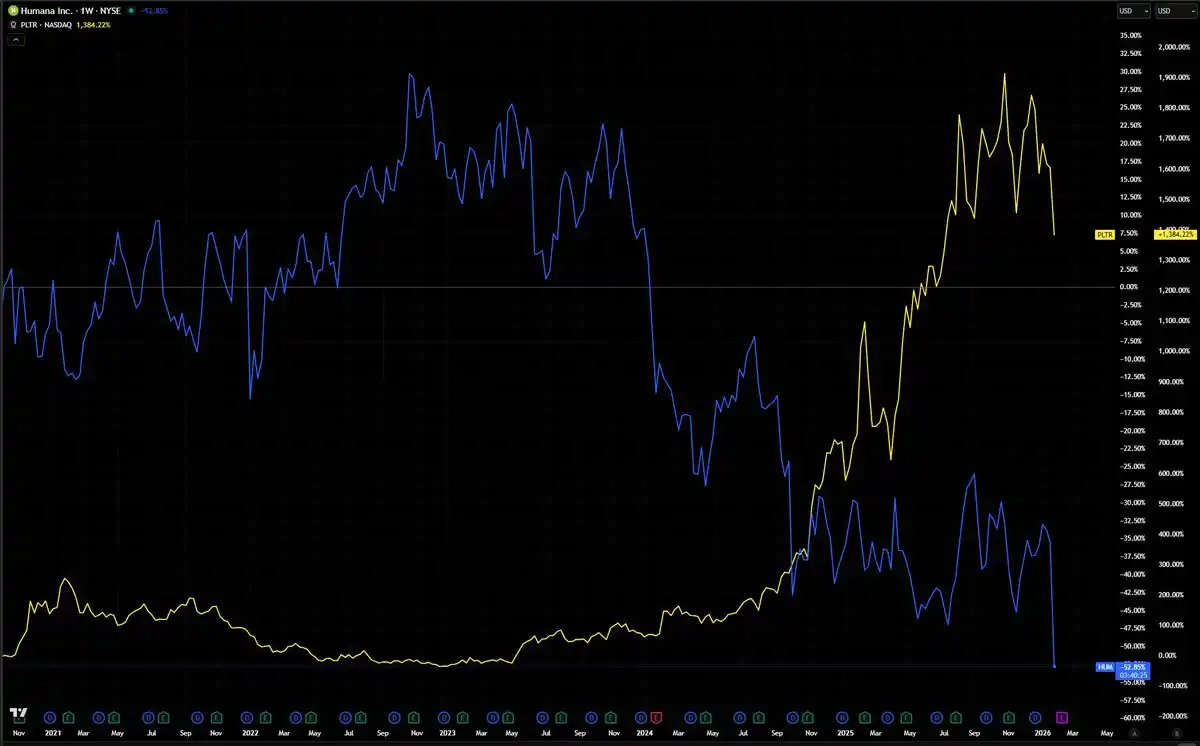
Humana Inc. can be considered the single largest publicly traded company in the United States with exposure to government healthcare spending, with a core focus on Medicare Advantage. Compared to similar companies, the highest proportion of Humana's revenue and profit is directly tied to the Medicare reimbursement formula, making it extremely sensitive to CMS rate adjustments, audits, and policy changes, with virtually no comparable peers.
When AI Meets Inflation: Why This Is an Institutional Regime Change
Kevin Warsh has been calling for an “institutional regime change” at the Fed for over a decade. But what does that really mean?
The answer lies in a completely different theory of inflation.
The prevailing inflation models that dominate the Fed today were mostly established in the 1970s and have been in use ever since. These models posit that inflation arises from an overheated economy and too rapid wage growth.
Warsh completely rejects this explanation. In his view, the root cause of inflation is not in wages but in the government itself—when the government prints too much, spends too much, and lives too “comfortably,” inflation occurs.
This viewpoint is not subtly expressed but rather a position he has clearly articulated on multiple occasions.
This is the true “institutional regime change.” It's not about whether the Fed is hawkish or dovish, nor is it about raising or lowering rates by 25 basis points. The key is to completely rewrite the Fed's framework for analyzing inflation, shifting from a theory that attributes inflation to workers and economic growth to a framework that holds government spending itself to account.
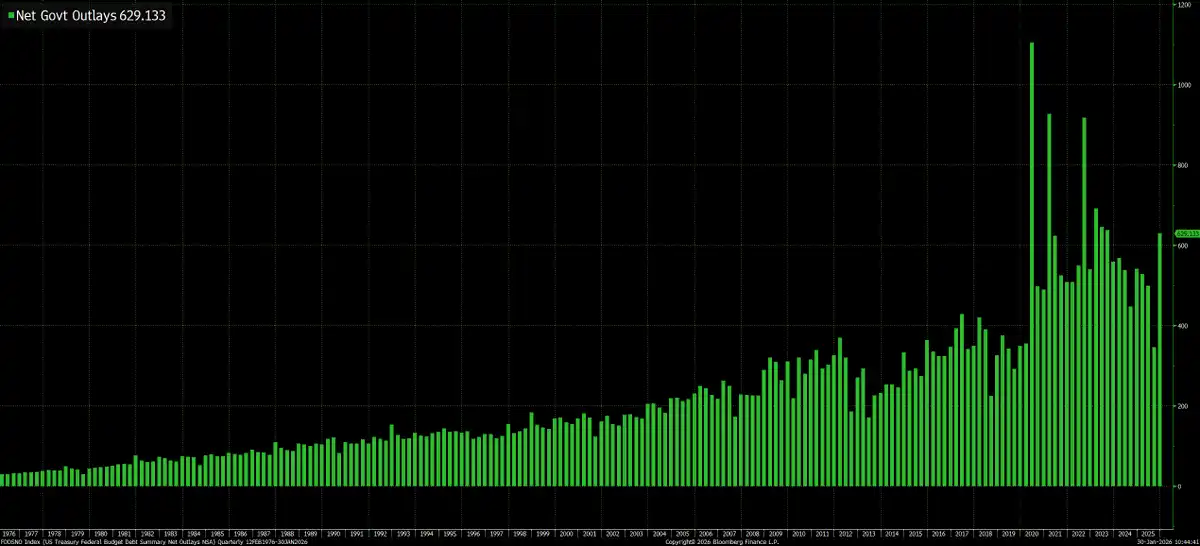
Things are starting to get interesting from here.
Woah is equally optimistic about AI. In the same interview, he pointed out that AI will drive down the cost of nearly everything, and the U.S. is at the cusp of a massive productivity boom. He believes the current Fed has not fully grasped this and is constrained by old models, mistaking economic growth for inflation.
Therefore, on the one hand, Woah sees AI as a structural deflationary force that will continuously lower costs throughout the economic system; on the other hand, he believes that the real source of inflation is government overspending and fraudulent behavior—where a large amount of money is injected into the system without generating corresponding real output.
And these seemingly different assessments ultimately converge at the same node: Palantir.
In fact, this institutional shift is not just reshaping the Fed itself but is reconfiguring the entire framework through which we understand interest rates, the dollar, and global capital flows.
If Woah's assessment is correct, that inflation mainly stems from fiscal expansion rather than supply-side shocks, then the traditional macro playbook will become obsolete.
Within this framework, rate cuts no longer indicate a dovish stance but rather signify policymakers' confidence that fiscal discipline and AI-driven efficiency gains are taking on the primary role of inflation suppression. The Fed is no longer the adversary of fiscal constraint but its collaborator.
A Fed that rejects monetizing fiscal deficits while actively supporting reducing fraud and trimming expenses will create a monetary regime vastly different from the environment that markets have priced in over the past decade.
On a global scale, this point is equally significant. If the U.S. can demonstrate that AI can be scaled to enhance fiscal accountability, including waste reduction, fraud detection, and government simplification, then this model will either be emulated by other advanced economies or become the benchmark they must compete against.
The so-called AI arms race is not just about chip or model capabilities but more about who can be the first to reshape the relationship between government and the economy with AI.
Furthermore, there is also the deflationary force that AI itself brings. Woah's position is very clear: he believes AI will lower costs throughout the economy, and we are on the eve of a productivity surge, but the current Fed has not fully realized this yet.
If his assessment holds true, we will enter an unprecedented phase: where the structural force is deflationary (productivity gains from AI), and the source of inflation is directly targeted and suppressed (government waste and fraud). This will create an investment environment that has not been seen since the 1990s.
The old thinking framework of Hawk vs. Dove, Rate Hike vs. Rate Cut, Risk-On vs. Risk-Off is no longer sufficient to explain the ongoing changes.
By 2026, the real question is not where the federal funds rate stands, but rather: Does this alliance truly have the capacity to execute its grand vision.
Once the system is in place, how will the market be repriced?
Kevin Warsh will become the next Fed Chair. The market may instinctively categorize him as a 'hawk,' but this understanding is not accurate. As we truly enter 2026, Warsh's policy stance will exhibit more complexity and structural characteristics.
Here are the key policy directions he may drive and the potential impact on different asset classes:
· AI / Semiconductor ($NVDA, $MU): Extremely Bullish
· Metals (Silver, Gold): Extremely Bearish
· Crypto Assets ($BTC, $CRCL): Surface-level contradiction, actually leaning bullish
· Banking and Financials ($JPM, $BOA): Bullish
· Housing and Real Estate: Divergence / Uncertainty
· Renewable Energy: Bearish
· Small Caps ($RUT): Bullish
· Overseas Stocks:
Japan, South Korea: Resilient
Emerging Markets (EM): Under Extreme Pressure
China and Hong Kong: Bearish
Europe ($VGK, $EZU): Cautious Outlook
AI / Semiconductor (From NVIDIA to Micron): Extremely Bullish
Warsh is a clear and consistent AI bull.
By the end of 2025, he expressly stated that AI is a powerful structural "disinflationary" force. In his view, the surge in productivity brought by AI can allow the economy to sustain rapid growth without necessarily driving up inflation.
It is this judgment of "productivity boom" that provided a strong theoretical basis for his support of rate cuts while the economy had not significantly cooled.
("Fed's Leadership Failure," The Wall Street Journal, November 16, 2025)
This starkly contrasts with the market's previous stereotype of him — Warsh was often seen as a rigid, high-interest-rate hawk emphasizing anti-inflationary policies.
And now, not only does he support rate cuts, he explicitly wants to accelerate the implementation and expansion of AI.
Metals (Silver, Gold): Extremely Bearish
Gold has long been seen as a hedge against a weakening dollar and currency debasement. But under Wash's policy framework, this logic is being undermined.
He advocates for shrinking the Fed's balance sheet, ending "money-printing stimulus," which directly undermines the core reason for holding gold. Additionally, a strong dollar has further raised the cost of metals for international buyers.
It should be noted that silver plummeted 33% intraday, primarily driven by technical factors such as margin adjustments leading to cascading liquidations; the impact of the new Fed chair may only be a secondary force.
Cryptocurrencies ($BTC, $CRCL): Surface Contradiction, Actually Leaning Bullish
Wash has stated, "If you're under 40, Bitcoin is your new gold." In his view, Bitcoin is a legitimate value storage tool, representing an intergenerational shift from physical precious metals to digital assets.
He also highly praises blockchain, calling it the "latest, most disruptive foundational software," and believes the U.S. must maintain its leadership in this area to sustain long-term competitiveness.
But the question is: if his stance is bullish, why is the price under pressure? The reason is that the market is gradually realizing that while Wash supports lower policy rates, he also insists on balance sheet reduction and monetary discipline.
This has raised a new concern—we may be entering an era of "rate cuts without QE cooperation." The cost of borrowing may decrease, but the "liquidity flood" factor that has repeatedly propelled Bitcoin to new highs may not reoccur.
Therefore, a tension has emerged: Wash is optimistic about cryptocurrencies in terms of technology and long-term trends, but his monetary constraints may suppress liquidity premiums in the short term.
Banking and Financial Sector: Bullish
With his background at Morgan Stanley and longstanding criticism of regulatory "mission creep," Wash has always been seen as a policy choice favoring the banking system. The market widely expects him to roll back some complex bank capital regulatory requirements (such as Basel III).
Analysts believe this will significantly benefit regional and community banks, as more capital will be released for real credit expansion.
Housing and Real Estate: Divergence
Powell advocates for a significant cut in the federal funds rate, which will directly lower **Adjustable Rate Mortgages (ARM)** and construction financing costs.
But the risk is: he expressly opposes the Fed holding about $2 trillion in Mortgage-Backed Securities (MBS). Many economists warn that even as other rates fall, 30-year fixed mortgage rates could still be pushed up to the 7%-8% range.
Renewable Energy: Bearish
Powell plans for the Fed to withdraw from global climate-related organizations (such as the "Network for Greening the Financial System") and to end climate stress tests on banks.
During Powell's tenure, the Fed had, through regulation, encouraged banks to include climate considerations in lending. Powell hopes to end this mechanism, effectively removing the "policy tailwind" that green projects previously enjoyed.
Small-Cap Stocks: Bullish
Powell has emphasized multiple times that the Fed should refocus on the real drivers of the economy - small businesses and entrepreneurs, not "Wall Street's overprotected large institutions."
He is expected to push for a systematic rollback of bank regulations, which directly benefits small-cap stocks. By easing the regulatory burden on community banks, the channels for small business financing will be significantly widened.
Foreign Stocks: Divergence
Powell's policy mix may create significant divergence globally: one group of economies will benefit from U.S. growth and AI investment, while another may be more easily suppressed by a strong dollar and global liquidity tightening.
Japan / South Korea (such as Samsung, SK Hynix): Relatively resilient as they hold key entity bottlenecks in the AI and robotics industry, which are the productivity engines Powell values.
In this context, a strong dollar becomes a competitive tool for them:
Export Effect: Contracts are mostly dollar-denominated, leading to significantly amplified profits after exchange rate conversion;
Viewed more "affordably" from a U.S. perspective: A strong dollar makes Japanese robots and Korean chips more price-competitive for U.S. firms, accelerating productivity gains and boosting the profitability of these companies.
China:
A strong dollar will continue to pressure the yuan, limiting the operational space of monetary policy.
Emerging Markets:
A significant increase in the value of the dollar significantly raises dollar-denominated debt burdens, exacerbating risk exposure.
Europe:
A weakened euro favors exports, but rising energy import costs present a structural constraint.
Last Friday, silver and gold experienced a sharp drop, triggering hedging and derisking behavior, leading to a temporary liquidity crunch.
The market may still consider Powell a "traditional hawk," but based on his recent comments, in the short term, he is closer to an "AI-first dove."
The current market is digesting a new combination scenario: rate cuts occurring alongside balance sheet reduction.
Within this framework, multiple trading theses, from the AI theme to small-cap growth, are still seen as having continuity.
You may also like

Business Opportunities of Tokenized Stocks
In-depth research report on the Resolv protocol hacking incident, who is the final payer?

Crypto Market Sees Large Liquidations: $272 Million in Long Positions Affected
Key Takeaways In the last 24 hours, $272 million worth of contracts were liquidated across the entire crypto…

Whale Increases BTC Shorts and Bets on Crude Oil: A Strategic Crypto Move
Key Takeaways A prominent whale, known as “UnRektCapital,” has strategically escalated its short position in Bitcoin while simultaneously…

Hackers in Brazil Use Fake Google Play Store to Steal Cryptocurrency
Key Takeaways Hackers in Brazil are exploiting fake Google Play Store pages to spread Android malware. Infected devices…

Exchanging 200,000 for nearly 100 million, DeFi stablecoins face another attack

The underlying business agreement of the trillion-dollar Agent economy: Understanding ERC-8183, it's not just about payments, but the future

When Wall Street's ETH begins to "yield": Looking at the asset properties of Ethereum from BlackRock's ETHB
The Power of Agency: The Agentic Wallet and the Next Decade of Wallets

Understanding x402 and MPP in One Article: Two Routes for Agent Payments

Particle Founder: The entrepreneurial insights I have gained the most from in the past year

Huang Renxun's latest podcast transcript: The future of Nvidia, the development of embodied intelligence and agents, the explosion of inference demand, and the public relations crisis of artificial intelligence

OKX Ventures Research Report: AI Agent Economic Infrastructure Research Report (Part 1)

The migration of settlement rights: B18 and the institutional starting point of on-chain banks

From Tencent and Circle: Looking at the Simple and Difficult Questions of Investment

The second half of stablecoins no longer belongs to the crypto circle

Cursor "Shell" Kimi Controversy Reversed: From Copyright Infringement Allegations to Authorized Collaboration, China's Open Source Model Once Again Becomes a Global AI Foundation

The Real Reason Tokens Don't Sell: 90% of Crypto Projects Overlook Investor Relations
Business Opportunities of Tokenized Stocks
In-depth research report on the Resolv protocol hacking incident, who is the final payer?
Crypto Market Sees Large Liquidations: $272 Million in Long Positions Affected
Key Takeaways In the last 24 hours, $272 million worth of contracts were liquidated across the entire crypto…
Whale Increases BTC Shorts and Bets on Crude Oil: A Strategic Crypto Move
Key Takeaways A prominent whale, known as “UnRektCapital,” has strategically escalated its short position in Bitcoin while simultaneously…
Hackers in Brazil Use Fake Google Play Store to Steal Cryptocurrency
Key Takeaways Hackers in Brazil are exploiting fake Google Play Store pages to spread Android malware. Infected devices…


 App
App